
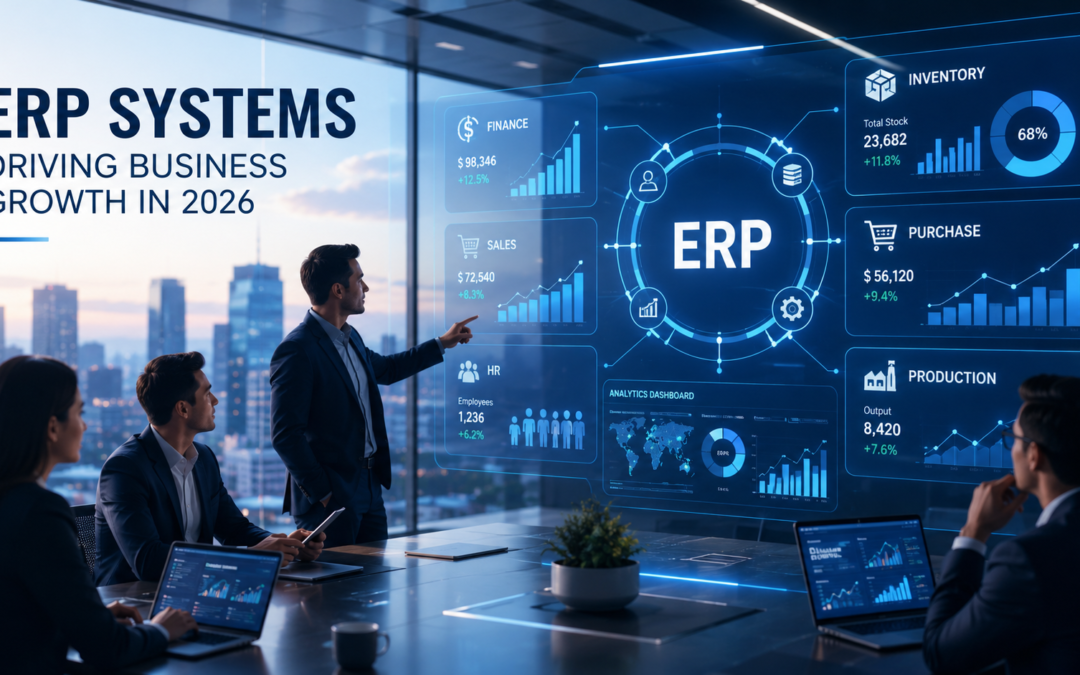
ERP Software: 10 Reasons Why Businesses Are Adopting ERP Systems in 2026
ERP software is rapidly becoming the backbone of modern businesses. In 2026, organizations are under increasing pressure to improve efficiency, streamline operations, reduce costs, and make faster business decisions. Traditional disconnected systems are no longer sufficient for growing businesses.
An advanced ERP system integrates finance, sales, inventory, procurement, HR, operations, and reporting into a single centralized platform. This enables businesses to achieve greater business automation, improve collaboration, and accelerate digital transformation.
Whether you are a startup, SME, manufacturer, distributor, retailer, or enterprise organization, ERP software can transform how your business operates.
In this guide, we'll explore the 10 major reasons why businesses are increasingly adopting ERP systems in 2026.
Table of Contents
- Why ERP Systems Matter in 2026
- Centralized Business Operations
- Improved Business Automation
- Real-Time Reporting
- Better Inventory Management
- Enhanced Customer Experience
- Stronger Financial Control
- Scalable Business Growth
- Improved Team Collaboration
- Data-Driven Decision Making
- Digital Transformation Readiness
- Common ERP Adoption Mistakes
- Frequently Asked Questions
Why ERP Systems Matter in 2026
Businesses today generate massive amounts of data across multiple departments. Without a centralized system, information becomes fragmented, reporting becomes inaccurate, and decision-making slows down.
Enterprise Resource Planning software solves these challenges by bringing all critical business processes together under one platform.
ERP systems help businesses improve:
- Operational efficiency
- Business automation
- Financial visibility
- Inventory control
- Team productivity
- Customer satisfaction
- Digital transformation initiatives
10 Reasons Why Businesses Are Adopting ERP Systems in 2026
1. ERP Software Centralizes Business Operations
One of the biggest benefits of ERP software is centralization.
ERP Connects:
- Finance
- Sales
- Purchasing
- Inventory
- Human Resources
- Customer Service
- Production
Instead of using separate systems, businesses gain complete visibility from one platform.
2. Business Automation Reduces Manual Work
Manual processes consume valuable time and often result in errors.
ERP Automation Examples
- Invoice generation
- Purchase approvals
- Inventory updates
- Payroll processing
- Customer follow-ups
- Reporting workflows
Automation allows teams to focus on strategic work instead of repetitive tasks.
3. Real-Time Reporting and Analytics
Modern ERP systems provide real-time dashboards and business intelligence.
Managers can instantly access accurate information instead of waiting for manual reports.
Key Reports Include:
- Sales performance
- Cash flow reports
- Inventory status
- Operational KPIs
- Profitability analysis
4. Better Inventory and Supply Chain Management
Inventory control is critical for profitability.
ERP software helps businesses track stock levels, automate replenishment, reduce shortages, and prevent overstocking.
This improves operational efficiency while reducing carrying costs.
5. Enhanced Customer Experience
Customer expectations continue to increase in 2026.
ERP systems provide teams with complete customer information, helping them deliver faster support, accurate order processing, and personalized service.
Improved customer experiences often lead to higher retention rates.
6. Stronger Financial Management
Financial accuracy is essential for sustainable growth.
ERP Financial Features
- Accounts payable
- Accounts receivable
- General ledger
- Budget management
- Tax compliance
- Cash flow forecasting
Businesses gain complete visibility into financial performance.
7. ERP Supports Scalable Business Growth
As companies grow, managing operations becomes increasingly complex.
ERP systems provide a scalable foundation that supports expansion without requiring multiple disconnected software tools.
This helps businesses grow efficiently.
8. Improved Team Collaboration
Departments often struggle when data is stored in separate systems.
ERP software creates a single source of truth that improves communication and collaboration between teams.
Everyone works with the same real-time information.
9. Better Data-Driven Decision Making
Successful businesses rely on accurate data.
ERP software provides detailed analytics that help leaders identify opportunities, reduce risks, and make smarter strategic decisions.
Access to reliable data improves confidence in decision-making.
10. ERP Accelerates Digital Transformation
Digital transformation remains a priority for businesses worldwide.
ERP systems provide the technology foundation required for automation, AI integration, cloud adoption, workflow optimization, and future innovation.
Organizations adopting ERP are better positioned for long-term success.
Learn more about ERP best practices from Gartner IT Research.
Common ERP Adoption Mistakes Businesses Should Avoid
- Choosing ERP software without clear objectives
- Ignoring employee training
- Poor implementation planning
- Underestimating data migration requirements
- Customizing excessively
- Not involving key stakeholders
- Failing to define KPIs
- Choosing software that cannot scale
Frequently Asked Questions
What is ERP software?
ERP software is a business management platform that integrates multiple departments and processes into a centralized system.
Why are businesses adopting ERP systems in 2026?
Businesses are adopting ERP systems to improve automation, efficiency, reporting, collaboration, and digital transformation.
How does ERP support business automation?
ERP automates repetitive tasks such as invoicing, inventory updates, reporting, approvals, payroll, and workflow management.
Can ERP software help small businesses?
Yes. Modern ERP solutions are available for SMEs and help improve efficiency, visibility, and growth management.
How does ERP support digital transformation?
ERP provides centralized data, automation capabilities, cloud integration, analytics, and scalable technology infrastructure.
Internal Linking Opportunities
- ERP Solutions
- CRM Software
- Business Automation Services
- Digital Transformation Solutions
- Custom Software Development
Conclusion
ERP software is no longer just a technology upgrade—it is a strategic business investment.
By improving business automation, streamlining operations, enhancing reporting, and supporting digital transformation, ERP systems help organizations become more efficient, agile, and competitive.
Businesses that adopt modern ERP solutions today are positioning themselves for sustainable growth and long-term success in 2026 and beyond.
Ready to Transform Your Business with ERP?
Our ERP experts help businesses implement powerful ERP software solutions that improve automation, operational efficiency, and digital transformation.
Schedule a Free ERP Consultation