Call Logicraftz Professionals +912231982472 to implement ERP automation, industry ERP solutions, business automation, and enterprise management systems.
ERP Automation: 6 Industries Gaining the Most
A practical guide to industry ERP, business automation, ERP solutions, workflow efficiency, and enterprise management for growing businesses.
Introduction
ERP automation is transforming how industries manage operations, data, teams, inventory, finance, projects, customers, and reporting. As businesses become more digital, manual workflows and disconnected systems are no longer enough to support speed, accuracy, and long-term growth.
Modern ERP solutions help companies automate repetitive tasks, centralize information, improve reporting, and strengthen enterprise management. For industries with complex operations, business automation through ERP can improve productivity and reduce costly errors.
In this guide, we will explore 6 major industries benefiting most from industry ERP and automation-driven enterprise systems.
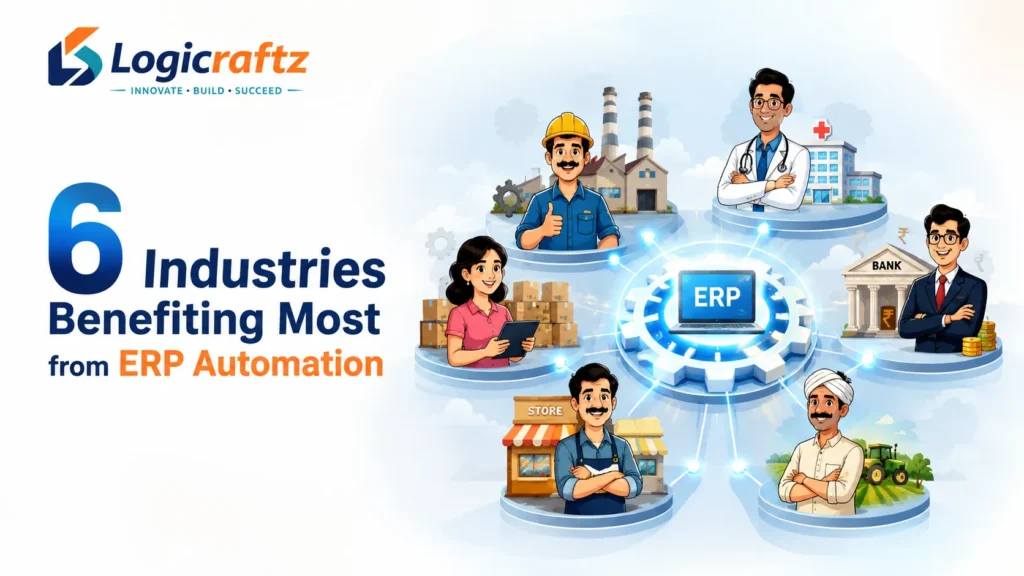
Table of Contents
Why ERP Automation Matters for Modern Industries
Every industry has unique workflows, but most businesses face similar challenges: manual data entry, delayed reporting, poor visibility, weak coordination, and inefficient resource planning.
Connected ERP systems solve these challenges by creating centralized platforms that support faster decisions and smoother operations. This helps teams reduce repeated work, avoid data confusion, and manage day-to-day processes more efficiently.
Teams can reduce repetitive work and complete tasks faster.
Approvals, reports, alerts, and updates can move through structured workflows.
Stock, orders, vendors, and warehouse activity become easier to track.
Management gets clearer reports for finance, operations, projects, and teams.
1. Manufacturing
Manufacturing companies benefit greatly from ERP automation because they manage production schedules, raw materials, inventory, suppliers, quality checks, costing, and dispatch operations. Without a connected system, production delays and stock errors can become expensive.
ERP Helps Manufacturers With
- Production planning
- Raw material tracking
- Inventory control
- Quality management
- Purchase automation
- Cost monitoring
- Dispatch visibility
Industry ERP helps manufacturers reduce delays, improve output, and manage production more efficiently.
2. Retail and E-Commerce
Retail and e-commerce businesses deal with fast-moving inventory, multiple sales channels, customer orders, returns, payments, warehouse updates, and delivery tracking. Manual systems can quickly create stock mismatches and poor customer experience.
ERP Solutions Support
- Order management
- Inventory synchronization
- Billing automation
- Customer records
- Warehouse management
- Sales reporting
- Return tracking
ERP automation helps retailers improve stock accuracy, reduce order delays, and deliver a better buying experience.

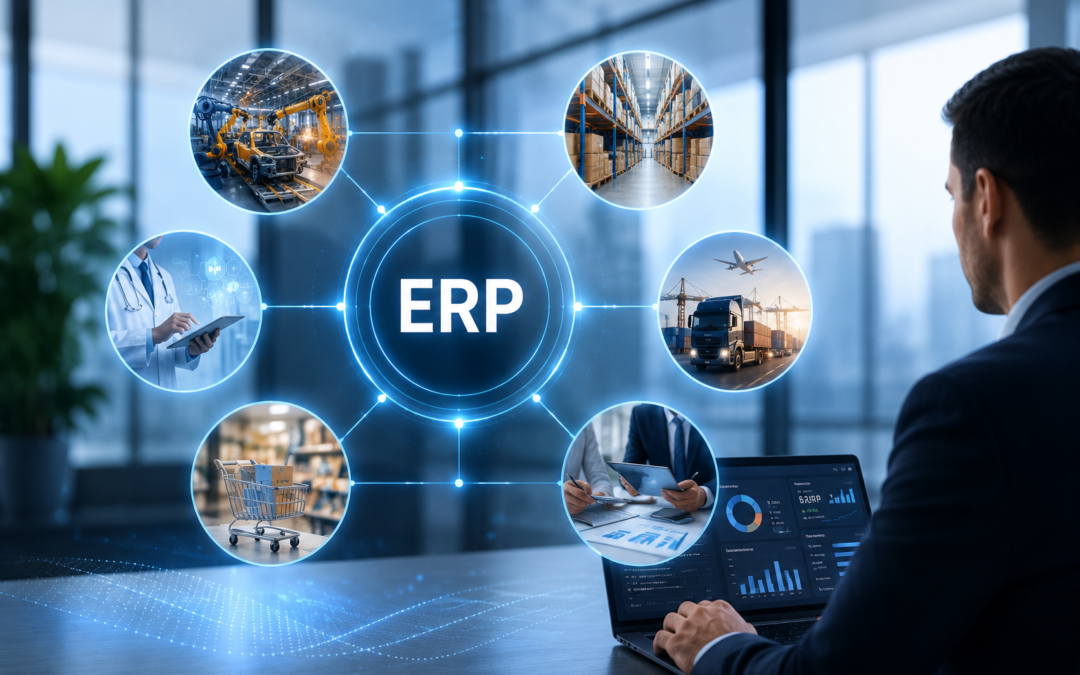
ERP systems help manufacturing and retail teams manage inventory and operations
3. Healthcare and Clinics
Healthcare organizations need accurate data, compliance, scheduling, billing, inventory, patient service workflows, and staff coordination. A centralized system can reduce manual workload and improve administrative control.
ERP Automation Helps With
- Appointment scheduling
- Billing and finance
- Medical inventory tracking
- Staff management
- Reports and compliance
- Patient communication
- Service coordination
ERP systems improve healthcare administration by helping clinics and hospitals manage data, billing, and operations from one platform.
4. Construction and Real Estate
Construction and real estate companies manage projects, contractors, materials, budgets, timelines, approvals, client updates, documents, and payment schedules. Disconnected tools can make project tracking difficult.
ERP Supports
- Project tracking
- Material planning
- Budget monitoring
- Contractor management
- Document workflows
- Payment tracking
- Client updates
Business automation improves project control and helps reduce delays caused by manual approvals and scattered documents.

Industry ERP workflows help healthcare and construction teams improve control
5. Logistics and Supply Chain
Logistics businesses need visibility across shipments, warehouses, routes, vendors, billing, delivery performance, and customer updates. Delays in one area can affect the entire chain.
ERP Solutions Improve
- Shipment tracking
- Warehouse management
- Route planning
- Vendor coordination
- Delivery reporting
- Invoice automation
- Customer delivery updates
Better enterprise management helps logistics companies improve speed, reliability, and operational visibility.
6. Professional Services
Agencies, consultants, IT companies, and service-based businesses use ERP systems to manage projects, teams, clients, billing, productivity, resource allocation, and performance reporting.
ERP Helps Manage
- Project timelines
- Client communication
- Employee tasks
- Billing and invoicing
- Resource allocation
- Performance reports
- Service delivery tracking
You can learn more about enterprise technology trends from Gartner IT Research and Oracle ERP Guide.
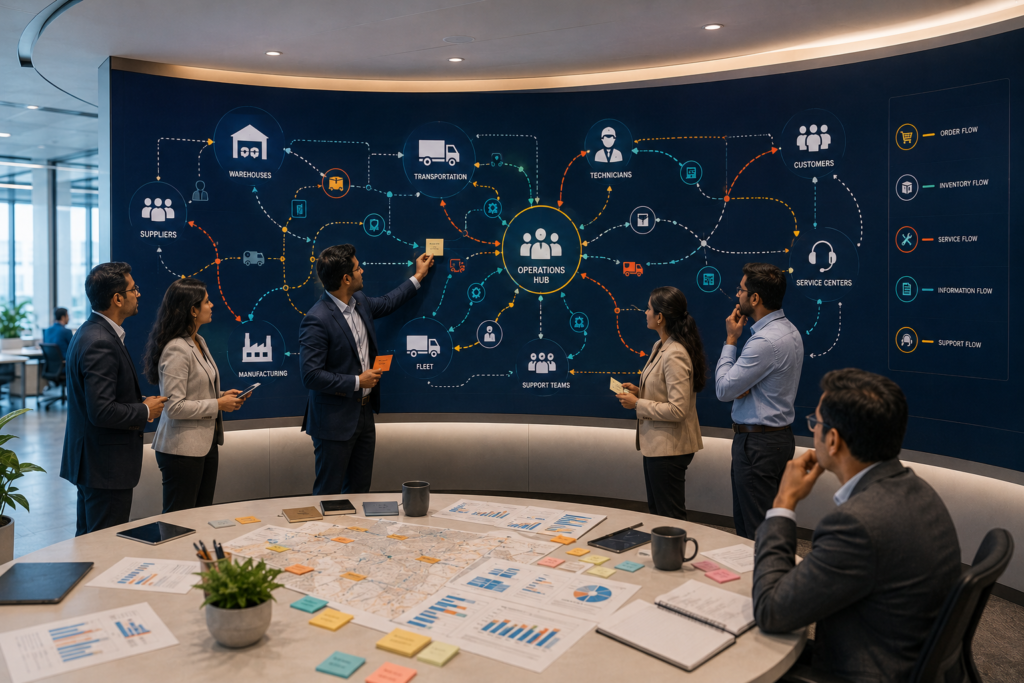
ERP platforms help logistics and service businesses manage teams and workflows
Manual Operations vs ERP-Driven Operations
| Area | Manual Operations | ERP-Driven Operations |
|---|---|---|
| Data Management | Scattered records and duplicate entries | Centralized business information |
| Workflow Control | Manual approvals and delayed updates | Automated workflows and status tracking |
| Reporting | Reports prepared manually | Real-time dashboards and analytics |
| Team Coordination | Departments work separately | Connected teams and shared visibility |
| Scalability | Hard to scale with disconnected tools | Scalable system for users, locations, and departments |
Common ERP Automation Mistakes Businesses Should Avoid
Choose ERP solutions based on your industry's real workflows.
Map workflows before automating them.
Teams need proper training to use the system effectively.
Fix the process before applying automation.
ERP should connect with existing business tools where needed.
Measure automation results after launch.

ERP-driven automation helps industries improve productivity and control
Continue Reading
Frequently Asked Questions
Q: What is ERP automation?
ERP automation uses ERP software to automate repetitive business processes such as billing, approvals, inventory updates, reporting, and workflow management.
Q: What is industry ERP?
Industry ERP refers to ERP solutions designed or customized for specific industries such as manufacturing, retail, healthcare, construction, logistics, and services.
Q: How does business automation improve efficiency?
Business automation reduces manual work, saves time, improves accuracy, speeds up approvals, and helps teams focus on higher-value tasks.
Q: Which industries benefit most from ERP solutions?
Manufacturing, retail, healthcare, construction, logistics, and professional services are among the industries that benefit most from ERP solutions.
Q: How does ERP improve enterprise management?
ERP improves enterprise management by centralizing data, automating workflows, improving reports, and connecting departments in one system.
Need ERP Automation for Your Industry?
A modern ERP system helps industries automate workflows, centralize data, improve reporting, and create stronger operational control.
Logicraftz Solutions LLP builds and implements ERP solutions designed for industry-specific workflows, business automation, and enterprise management.
Introduction
Organizations across every industry are under increasing pressure to improve efficiency, reduce operational costs, and deliver better customer experiences. As businesses expand, managing finance, inventory, procurement, manufacturing, sales, human resources, and customer support through disconnected applications becomes increasingly difficult. Information silos, manual processes, and inconsistent reporting often lead to delays, poor decision-making, and reduced productivity.
Implementing industry ERP enables organizations to unify critical business functions into a single digital environment. Supported by intelligent business automation, scalable ERP solutions, and effective enterprise management, businesses can improve collaboration, streamline operations, and gain complete visibility into organizational performance.
Whether operating in manufacturing, healthcare, retail, logistics, education, construction, hospitality, or professional services, organizations benefit from centralized platforms that simplify complex workflows while supporting long-term growth.
Understanding Industry ERP
Every industry has unique operational requirements. A manufacturing company manages production schedules and raw materials, while a healthcare provider focuses on patient records and compliance. Retail businesses monitor inventory and point-of-sale transactions, whereas educational institutions handle admissions, attendance, and fee management.
An industry ERP platform is designed to address these specialized requirements while connecting every department through one integrated system. Instead of maintaining separate applications for accounting, purchasing, inventory, payroll, customer records, and reporting, employees work from a centralized database where information is updated in real time.
This unified approach improves accuracy, reduces duplicate data entry, and ensures departments always work with consistent information.
Why Enterprise Management Matters
Effective enterprise management involves coordinating people, processes, resources, and technology to achieve organizational goals. Leaders need complete visibility into operations so they can allocate resources efficiently, monitor performance, and make informed decisions.
Modern management platforms help organizations:
- Improve operational transparency
- Standardize business processes
- Strengthen collaboration
- Increase accountability
- Optimize resource utilization
- Improve financial control
- Monitor organizational performance
- Support compliance requirements
- Reduce operational risks
- Enable strategic planning
When management has access to accurate, real-time information, decision-making becomes faster and more reliable.
Business Automation Improves Operational Efficiency
Many daily business activities involve repetitive manual work that consumes valuable employee time. Tasks such as purchase approvals, invoice processing, document routing, inventory updates, leave approvals, and internal notifications often create unnecessary delays when handled manually.
Implementing business automation allows organizations to streamline these activities through predefined workflows.
Automated processes commonly include:
- Purchase request approvals
- Employee onboarding
- Invoice verification
- Inventory adjustments
- Vendor notifications
- Payroll processing
- Task assignments
- Document approvals
- Internal communication
- Scheduled reporting
Reducing manual effort allows employees to focus on innovation, customer service, and business development instead of administrative work.
ERP Solutions Connect Every Department
Modern ERP solutions create a connected environment where information flows seamlessly between departments.
Finance teams receive real-time purchasing data.
Warehouse teams monitor inventory movement instantly.
Production managers can review manufacturing schedules without waiting for manual updates.
Human resources maintain accurate employee records while leadership teams monitor performance using interactive dashboards.
This level of connectivity improves collaboration while reducing communication gaps that often slow business operations.
Employees spend less time searching for information and more time delivering value to customers and stakeholders.
Benefits of a Centralized Business Platform
Organizations that adopt an integrated operational platform often experience measurable improvements across multiple business functions.
Key advantages include:
- Faster reporting
- Improved data accuracy
- Better collaboration
- Reduced paperwork
- Simplified compliance
- Stronger financial visibility
- Improved inventory control
- Enhanced productivity
- Better decision-making
- Greater organizational agility
These improvements help businesses adapt more quickly to changing market conditions while creating a strong foundation for sustainable growth.
Data-Driven Decision Making
Reliable information is one of the most valuable assets an organization can possess. Interactive dashboards and real-time reporting provide leadership teams with immediate visibility into financial performance, procurement activities, operational efficiency, workforce productivity, inventory levels, and customer demand.
Instead of relying on outdated spreadsheets or manually prepared reports, managers can identify trends, monitor key performance indicators, and respond proactively to challenges. This data-driven approach reduces uncertainty, supports strategic planning, and helps organizations make confident decisions that improve long-term business performance.
Cloud Technology Supports Modern Business Operations
Cloud computing has become an essential part of modern organizations because it provides flexibility, security, and scalability without requiring significant investments in physical infrastructure. Businesses can securely access operational information from offices, warehouses, manufacturing facilities, customer locations, or remote work environments using internet-connected devices.
Cloud platforms simplify software maintenance by delivering automatic updates, regular security improvements, and reliable data backups. Organizations also benefit from improved collaboration because employees across multiple locations can work with the same real-time information. As operations expand, cloud infrastructure easily adapts to increasing business requirements without interrupting daily activities.
This flexibility enables organizations to respond quickly to market changes while supporting long-term expansion plans.
Improve Financial and Operational Visibility
Business leaders require complete visibility into financial and operational performance to make confident strategic decisions. Integrated management platforms provide real-time reporting that helps organizations monitor revenue, expenses, inventory, procurement, workforce productivity, and departmental performance from a single dashboard.
Accurate reporting allows management teams to identify inefficiencies before they become costly problems. Instead of waiting for manually prepared reports, executives receive immediate access to meaningful business insights that support faster planning and more effective resource allocation.
Real-time information also improves accountability because department managers can monitor key performance indicators and evaluate progress toward organizational objectives.
Strengthen Supply Chain and Inventory Control
Efficient inventory management is critical for maintaining profitability and ensuring timely customer deliveries. Overstocking increases storage costs, while insufficient inventory may delay production or customer orders.
Integrated operational platforms help businesses monitor stock levels, supplier performance, warehouse movement, purchase orders, material availability, and product demand in real time. Procurement teams receive accurate information that supports smarter purchasing decisions, while warehouse managers can optimize storage capacity and reduce inventory discrepancies.
Improved visibility across the supply chain allows organizations to minimize waste, reduce operating costs, and improve customer satisfaction through reliable product availability.
Why Businesses Trust Logicraftz
Logicraftz delivers intelligent digital solutions that help organizations simplify operations, improve collaboration, and accelerate digital transformation. Every implementation begins with understanding the client's operational challenges, business objectives, and future growth plans before designing a customized solution.
The company provides complete implementation services, including business consultation, solution architecture, customization, system integration, employee training, data migration, testing, deployment, and ongoing technical support. This comprehensive approach ensures organizations maximize the value of their technology investments while minimizing operational disruptions.
With experience across manufacturing, healthcare, education, retail, logistics, hospitality, construction, financial services, and professional industries, Logicraftz develops scalable platforms that continue supporting organizations as they grow.
By combining technical expertise with industry knowledge, the company helps businesses improve productivity, strengthen collaboration, enhance reporting capabilities, and make informed decisions using reliable operational data. Organizations partnering with Logicraftz gain a trusted technology partner committed to delivering long-term value, operational excellence, and sustainable business success in an increasingly competitive digital marketplace.
Manufacturing Operations Become More Efficient
Manufacturing organizations manage numerous interconnected activities every day. Raw material procurement, production planning, quality inspections, warehouse coordination, and product dispatch must work together seamlessly to maintain efficiency.
An integrated operational platform provides complete visibility into every production stage. Managers can monitor work orders, machine utilization, production schedules, material availability, and finished goods inventory through centralized dashboards.
This visibility reduces production delays, minimizes waste, and improves delivery performance. Better coordination between departments also helps organizations maintain consistent product quality while controlling manufacturing costs.
Procurement and Vendor Management
Strong supplier relationships play a critical role in maintaining uninterrupted business operations. Procurement teams need accurate information about purchasing requirements, vendor performance, pricing history, and delivery schedules.
A centralized procurement process helps organizations:
- Compare supplier quotations
- Generate purchase orders
- Track approvals
- Monitor deliveries
- Evaluate supplier performance
- Maintain purchasing history
- Control procurement costs
- Improve contract management
- Reduce purchasing delays
- Strengthen supplier relationships
Well-organized procurement activities contribute to operational stability while improving financial performance.
Human Resource Management
Employees are one of the most valuable assets within any organization. Managing workforce information efficiently supports productivity, compliance, and employee satisfaction.
Integrated workforce management capabilities simplify activities such as:
- Employee records
- Attendance monitoring
- Leave management
- Payroll processing
- Recruitment
- Performance reviews
- Training management
- Shift scheduling
- Compliance documentation
- Workforce reporting
Reducing manual administration enables HR professionals to focus on employee development, organizational culture, and long-term workforce planning.
Business Intelligence Creates Strategic Advantages
Organizations generate enormous volumes of operational information every day. Converting this information into meaningful insights enables better planning and stronger decision-making.
Business intelligence dashboards provide real-time visibility into:
- Revenue trends
- Operational efficiency
- Production performance
- Procurement activities
- Inventory turnover
- Employee productivity
- Customer demand
- Financial health
- Department performance
- Organizational objectives
Leadership teams can identify emerging trends, monitor key performance indicators, and respond quickly to changing business conditions.
Data-driven planning helps organizations remain competitive while reducing operational uncertainty.
Mobility Improves Workforce Productivity
Modern organizations increasingly depend on mobile accessibility to maintain productivity beyond traditional office environments.
Employees frequently work from customer locations, warehouses, manufacturing facilities, retail outlets, and remote offices.
Mobile access enables teams to:
- Review operational information
- Approve business requests
- Monitor reports
- Update records
- Access important documents
- Capture field information
- Communicate with colleagues
- Schedule meetings
- Respond to operational issues
- Maintain productivity while traveling
Instant access to accurate business information enables faster responses and improves collaboration across distributed teams.
Security Protects Critical Business Information
Digital transformation increases the importance of protecting organizational data.
Modern operational platforms include multiple security measures to safeguard sensitive information.
Essential security capabilities include:
- Role-based permissions
- Multi-factor authentication
- Data encryption
- Secure cloud infrastructure
- Audit trails
- Activity monitoring
- Automatic backups
- Disaster recovery planning
- Compliance reporting
- User access management
Strong security practices reduce business risks while protecting confidential operational and financial information.
Industry-Specific Benefits
Every industry operates differently, yet all organizations benefit from improved operational visibility and integrated business processes.
Manufacturing companies improve production efficiency and inventory control.
Healthcare providers simplify patient administration, procurement, and compliance.
Retail organizations improve inventory accuracy and purchasing coordination.
Educational institutions streamline admissions, fee collection, examinations, and administration.
Construction companies manage projects, procurement, equipment, and financial reporting more efficiently.
Hospitality businesses coordinate reservations, procurement, finance, and workforce management.
Logistics companies improve shipment tracking, warehouse coordination, and operational planning.
Professional service organizations strengthen project management, resource allocation, and financial reporting.
Regardless of industry, centralized operations improve productivity and support better decision-making.
Continuous Improvement Drives Long-Term Success
Successful organizations never stop improving.
Regular performance reviews allow businesses to identify operational bottlenecks, evaluate employee productivity, optimize resource allocation, and improve customer satisfaction.
Continuous improvement initiatives may include:
- Process optimization
- Employee training
- Technology upgrades
- Workflow simplification
- Operational audits
- Performance benchmarking
- Customer feedback analysis
- Resource optimization
- Cost reduction initiatives
- Strategic planning
Organizations committed to continuous improvement remain more adaptable and resilient during changing market conditions.
Why Logicraftz Delivers Long-Term Value
Logicraftz partners with organizations that want more than software—they want measurable business improvement. Every implementation begins with understanding operational challenges, evaluating current processes, and identifying opportunities to increase efficiency.
The team collaborates closely with stakeholders throughout planning, customization, implementation, testing, deployment, training, and ongoing support. This ensures every solution aligns with operational objectives while remaining flexible enough to support future expansion.
Logicraftz also emphasizes seamless integration with existing systems, intuitive user experiences, strong security practices, and reliable reporting. Businesses receive scalable solutions that simplify operations without disrupting daily activities.
With experience across manufacturing, healthcare, education, logistics, retail, hospitality, construction, and professional services, Logicraftz understands the operational challenges faced by different industries and develops practical solutions that generate measurable results.
Preparing for the Future of Enterprise Operations
Business environments continue evolving through artificial intelligence, predictive analytics, cloud computing, connected devices, and advanced reporting technologies. Organizations that invest in modern operational platforms today are better positioned to adapt to these innovations tomorrow.
Future-ready businesses prioritize operational visibility, process efficiency, workforce collaboration, and data-driven decision-making. They continuously evaluate emerging technologies while refining internal processes to improve organizational performance.
Long-term success depends on building flexible systems capable of supporting growth without increasing operational complexity.
By adopting integrated digital platforms, strengthening internal collaboration, improving resource utilization, and embracing innovation, organizations create a resilient operational foundation that supports sustainable growth, stronger competitiveness, and long-term business excellence in an increasingly digital economy.