
Pharma ERP Software
The Definitive Guide to Pharma ERP Software
Streamline Pharmaceutical Pharma, Strengthen Compliance, and Scale Operations with Intelligent Pharma ERP Solutions
Last Updated: 9th June 2026 | Author: Dhiren Shah
Transform pharma complexity into compliant digital control.
Every pharmaceutical business works inside a highly regulated ecosystem of raw materials, formulations, batches, laboratories, quality checks, documentation, approvals, warehouses, vendors, and distribution networks. Delayed batch records, manual documentation, disconnected departments, inaccurate inventory, and weak traceability can create compliance risks and operational losses.
Pharma ERP Software helps pharmaceutical manufacturers replace spreadsheet-driven work with one connected platform for production, quality, inventory, finance, compliance, and real-time decision-making.
Understanding Pharma ERP
One validated system for pharma pharmaceutical control.
Pharma ERP Software is a specialized enterprise resource planning system designed for pharmaceutical manufacturers, API producers, formulation units, nutraceutical companies, medical device businesses, and contract manufacturers. It integrates production planning, batch pharmaceutical, formula management, inventory, procurement, warehouse, quality assurance, quality control, finance, HR, CRM, and regulatory compliance into one centralized database.
Unlike generic accounting or inventory software, Pharma ERP is built around batch control, traceability, documentation, validation, quality workflows, and audit readiness. It helps companies manage materials from approved vendor purchase to batch production, lab testing, release, storage, dispatch, and customer delivery.

How Pharma ERP Software Works
Pharma ERP Software creates a single source of truth for every department. When a sales order or production requirement is entered, the system checks approved inventory, validates material availability, generates purchase or production requirements, reserves batches, schedules pharmaceutical based on equipment and cleanroom capacity, records batch activities, updates stock, captures QC results, manages approvals, and posts financial entries automatically.
Pharma ERP Architecture
Modern Pharma ERP architecture is built on secure databases, role-based access, workflow engines, validation-ready controls, audit trails, electronic records, web interfaces, mobile access, laboratory connectivity, barcode scanning, and APIs. It connects shop-floor execution, quality laboratories, warehouses, procurement teams, finance, and regulatory documentation into one controlled digital environment.
Core Architecture and Modules
Production, Batch, and Planning Modules
Plan batches, manage formulas, control resources, and execute pharma production with compliance-first visibility.
Pharma Production Planning
Pharma production planning aligns market demand, sales orders, forecast requirements, approved formulas, equipment capacity, manpower, and material availability to create practical production plans.
Material Requirement Planning
Material Requirements Planning calculates exact API, excipient, packing material, and consumable requirements based on formula, batch size, safety stock, and current inventory.
Batch Production Scheduling
Batch scheduling sequences pharmaceutical, granulation, compression, coating, filling, packing, cleaning, and quality checks across available equipment and work centers.
Capacity and Resource Planning
Capacity planning evaluates equipment availability, cleanroom slots, labor shifts, validation constraints, and QC testing timelines to avoid bottlenecks before production starts.
Pharma Demand Forecasting
Demand forecasting uses historical sales, seasonal demand, doctor/channel trends, export orders, and product movement to support better production and procurement planning.
Formula and Recipe Management
Formula and recipe management maintains approved master formulas, batch sizes, material ratios, yield expectations, process parameters, and revision-controlled specifications.
Process Routing and SOP Mapping
Process Routing and SOP Mapping and SOP mapping define every pharma pharmaceutical step, work center, setup time, cleaning requirement, in-process check, and expected production time.
Batch Execution Management
Shop-floor batch execution tracks batch progress, operator activity, material consumption, line clearance, in-process checks, deviations, and production status in real time.
Equipment Monitoring
Equipment monitoring tracks machine usage, downtime, calibration status, preventive maintenance schedules, and performance data for production and compliance teams.
Core Architecture and Modules
Inventory, Warehouse, and Supply Chain Modules
Create end-to-end material visibility from approved vendor to batch release and dispatch.
Batch Inventory Management
Tracks APIs, excipients, packing materials, semi-finished goods, quarantined stock, released stock, rejected stock, and finished goods with batch-wise visibility.
Pharma Warehouse Management
Warehouse management controls receiving, quarantine, sampling, approved storage, FEFO picking, dispensing, packing, dispatch, and location-wise stock movement.
Pharma Supply Chain ERP
Supply chain ERP provides visibility across approved vendors, incoming materials, purchase timelines, stock availability, logistics, distribution, and customer deliveries.
Procurement and Purchase Management
Procurement management automates purchase requisitions, vendor selection, quotation comparison, purchase orders, goods receipt, approval workflows, and budget control.
Approved Vendor Management
Vendor management tracks approved vendor lists, supplier qualification, delivery performance, quality ratings, pricing history, and audit documentation.
Barcode, QR Code, and RFID
Barcode, QR code, and RFID scanning reduce manual errors during material receipt, sampling, dispensing, production issue, warehouse transfer, and dispatch.
Batch Traceability Software
Traceability software tracks every batch and lot number from raw material supplier to production, testing, release, distribution, and final customer delivery.
Core Architecture and Modules
Financial, Quality, and Administrative Modules
Connect regulated operations with finance, sales, HR, quality, and compliance workflows.
Finance and Accounting
Finance and accounting include general ledger, accounts payable, receivable, fixed assets, GST, e-invoicing, costing, and real-time financial statements.
Batch Costing Software
Batch costing captures API cost, excipient cost, packaging material, labor, machine time, QC testing, rejection, yield variance, and overheads.
Sales Order Management
Sales order management handles quotations, customer orders, distributor orders, delivery commitments, dispatch planning, invoicing, and stock allocation.
CRM
CRM supports leads, distributors, institutional buyers, customer communication, product inquiries, follow-ups, and sales pipeline visibility.
HR and Payroll
HR and payroll manage employee records, attendance, shifts, training, payroll, overtime, and production-floor workforce allocation.
QA and QC Management
Quality management controls inspection plans, sampling, QC results, QA review, deviations, CAPA, change control, non-conformance, and batch release.
Calibration and Preventive Maintenance
Preventive maintenance schedules calibration, equipment servicing, cleaning checks, spare parts, breakdown reports, and compliance-ready maintenance records.
Advanced Technologies and Integrations
Built for Pharma 4.0 operations.
Modern Pharma ERP Solutions integrate IoT, AI, BI, LIMS, MES, barcode systems, validation controls, APIs, cloud access, audit trails, and security frameworks to support smarter regulated operations.

IoT Enabled Pharma ERP
IoT devices can capture temperature, humidity, equipment status, cold-room conditions, and machine data for alerts, monitoring, and preventive action.
AI Pharma ERP
AI improves demand forecasting, batch planning, inventory optimization, exception detection, and quality trend analysis beyond traditional reporting.
Business Intelligence, Reports, and Dashboards
BI dashboards convert production, QC, inventory, finance, and compliance data into visual KPIs for management and department heads.
MES Integration
MES integration connects ERP planning with real-time pharma shop-floor execution, batch status, operator activities, and equipment usage.
SCADA and PLC Integration
SCADA and PLC integration allows selected equipment data, process parameters, and machine status to flow into ERP for better monitoring.
LIMS Integration
LIMS integration connects sample registration, test results, COA generation, specifications, and lab approvals with ERP workflows.
E-Commerce and Distributor Portal Integration
Distributor portals and e-commerce integrations help manage orders, stock visibility, invoices, dispatch status, and customer communication.
Workflow Automation and Approval Management
Purchase approvals, quality approvals, batch release, deviations, CAPA, change control, and document reviews move digitally to responsible users.
Cloud, On-Premise, and Hybrid Pharma ERP
Cloud Pharma ERP offers remote access, on-premise provides local control, and hybrid deployment balances flexibility with regulated data requirements.
API Integration
APIs connect ERP with LIMS, MES, tax systems, logistics providers, distributor portals, barcode devices, and legacy applications.
Security and Role-Based Access
Role-based permissions protect sensitive formulas, QC results, finance data, batch records, and approval workflows.
Data Backup and Disaster Recovery
Encrypted backups, recovery planning, and access controls help protect operations during hardware failure, cyberattack, or accidental data loss.
Compliance Management
Compliance tools support GMP documentation, audit trails, electronic records, batch traceability, GST, e-invoicing, and export documentation.
Industry-Specific Pharma ERP Solutions
Configured for different pharma business models.
Different pharma companies need different workflows. ERP for Pharma must support formulations, API, contract pharmaceutical, quality laboratories, regulated warehouses, and distribution networks.
API Manufacturers
Manages API batches, potency, assay values, impurity tracking, solvents, yield, quality testing, and regulatory documentation.
Tablet and Capsule Manufacturers
Supports granulation, compression, coating, capsule filling, packing, batch records, in-process checks, and yield control.
Syrup and Liquid Pharma
Handles liquid formulations, mixing, filling, batch sizing, viscosity checks, packing, stability requirements, and lot traceability.
Ointment, Cream, and Gel Pharma
Controls recipe-based semi-solid pharmaceutical, raw material issue, mixing parameters, filling, packing, QC checks, and batch release.
Nutraceutical Pharma
Supports high-SKU nutraceutical production, formulation control, labeling, shelf-life tracking, inventory, and distribution management.
Pharmaceutical and Medical Device Companies
Provides quality holds, electronic records, clean area controls, device traceability, documentation, and compliance-ready workflows.
Injectable and Sterile Pharma
Supports controlled environments, line clearance, sterilization records, equipment status, batch documentation, and strict QA approvals.
Ayurvedic and Herbal Product Manufacturers
Handles herbal formulations, raw material traceability, supplier quality, batch processing, labeling, expiry, and inventory control.
Cosmetic and Personal Care Pharma
Manages formulas, packaging variants, batch production, quality checks, labeling requirements, and distribution workflows.
Biotech and Life Sciences Companies
Supports research-driven operations, controlled documentation, quality processes, inventory traceability, and regulated production planning.
Contract Pharma Organizations
Manages customer-specific formulas, batch costing, capacity booking, material ownership, quality agreements, and delivery commitments.
Third-Party Pharma Pharma
Controls customer-supplied materials, job work orders, contract pricing, production tracking, dispatch, and billing.
Export-Oriented Pharma Companies
Supports export documentation, batch traceability, multi-currency transactions, customer specifications, regulatory files, and shipment visibility.
Pharma Distribution and Wholesale
Tracks distributor orders, stock transfers, expiry dates, FEFO dispatch, invoicing, credit control, and territory-wise sales.
Cold Chain and Temperature-Controlled Products
Monitors cold storage inventory, temperature-sensitive batches, transport conditions, expiry, and compliance documentation.
Regulated Quality Laboratories
Connects sample management, test results, COA, specifications, approvals, retesting, and quality reporting with ERP data.
OEM, Loan-License, and Job Work Pharma
Manages loan-license production, customer-owned stock, subcontract operations, dynamic costing, and third-party processing.
The Logicraftz Solutions LLP Advantage
Pharma ERP implementation focused on compliance and outcomes.
Logicraftz Solutions LLP provides Pharma ERP Solutions for companies that need stronger control over production, quality, inventory, compliance, finance, and reporting. We focus on practical workflows, clean implementation, and measurable operational improvements.
Inaccurate Inventory
Logicraftz implements batch-wise inventory, FEFO control, barcode scanning, quarantine tracking, and real-time material visibility to reduce stock errors.
Delayed Production
Our pharma planning workflows help schedule batches, equipment, cleanrooms, QC testing, and packing activities with better visibility.
Disconnected Departments
We connect production, QA, QC, warehouse, purchase, sales, finance, and management teams using one controlled data platform.
Compliance Headaches
Logicraftz ERP Pharma workflows support traceability, audit readiness, GST, e-invoicing, batch documentation, approvals, and quality control.
Implementation, Migration, and Support
A structured rollout for safer Pharma ERP launch.
A successful Pharma ERP rollout requires careful requirement gathering, master data preparation, validation planning, workflow configuration, user training, testing, go-live support, and continuous improvement.
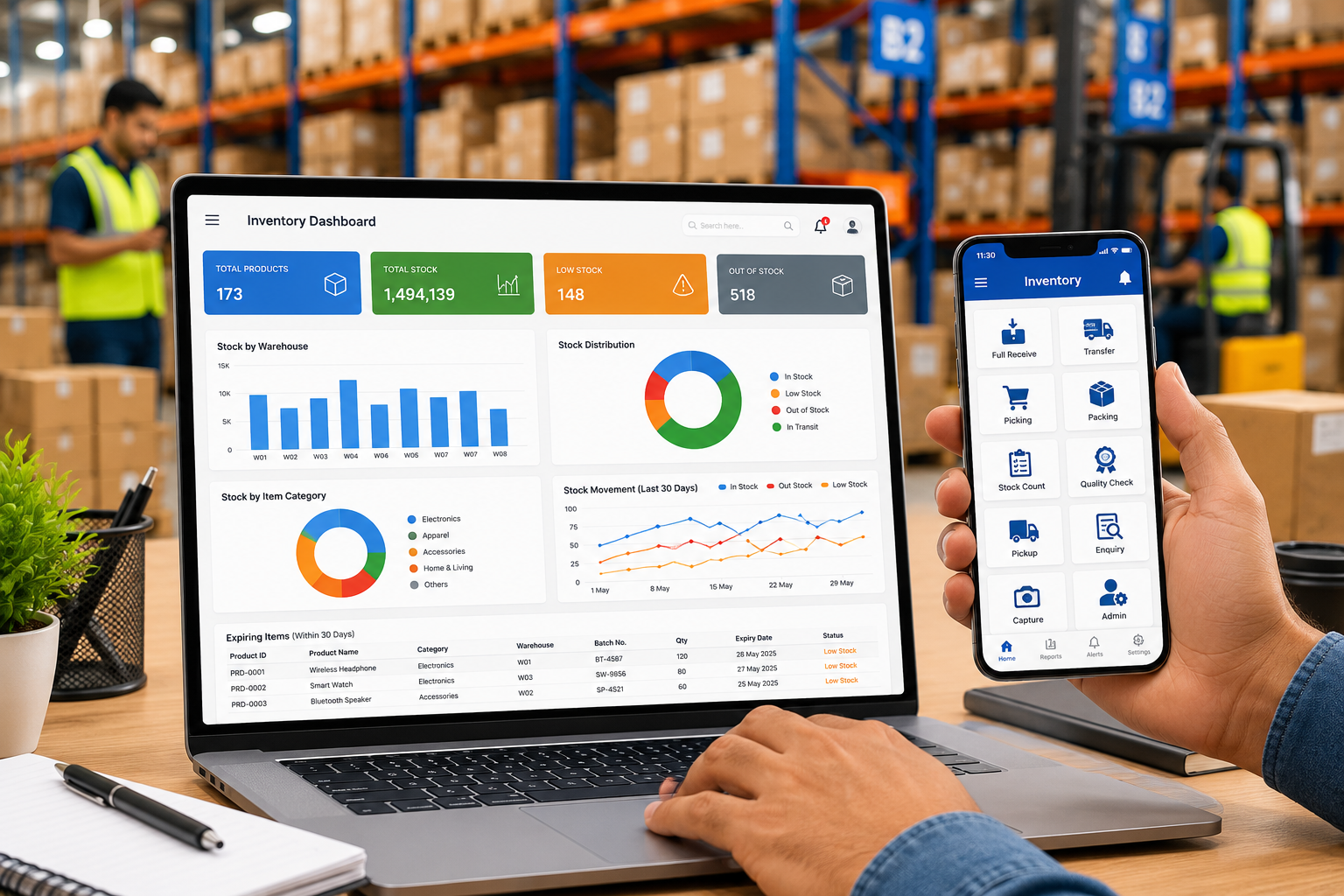
Implementation Process
Implementation begins with requirement discovery, process mapping, module selection, validation planning, configuration, testing, UAT, and go-live preparation.
Migration Process
Legacy data, item masters, formulas, vendors, customers, opening stock, batch balances, documents, and financial data are cleaned and migrated carefully.
Training
Role-based training helps QA, QC, production, stores, purchase, sales, finance, HR, and management teams use the system confidently.
Support
Post-go-live support includes helpdesk assistance, issue resolution, updates, user guidance, report improvements, and continuous process optimization.
Feature and Comparison Matrices
Deployment Options Comparison
| Feature | Cloud Pharma ERP | On-Premise Pharma ERP | Hybrid Pharma ERP |
|---|---|---|---|
| Hosting | Remote secure servers | Local company servers | Mixed environment |
| Upfront Cost | Lower | Higher | Medium |
| Maintenance | Vendor supported | Internal IT supported | Shared responsibility |
| Accessibility | Anywhere with access control | Mostly local network | Flexible |
| Best For | Growing pharma companies | Highly controlled environments | Multi-location pharma operations |
Pharma Pharma Pharma Types Supported
| Mode | Typical Pharma Units | ERP Focus |
|---|---|---|
| Batch Pharma | Tablets, capsules, syrups | Formula, batch record, yield, QA/QC |
| Process Pharma | API, liquids, chemicals | Recipe, potency, shelf-life, traceability |
| Sterile Pharma | Injectables, ophthalmics | Cleanroom, line clearance, strict approvals |
| Contract Pharma | CMO, third-party units | Customer formulas, costing, capacity booking |
| Distribution | Wholesalers, exporters | Expiry, FEFO, stock transfer, invoicing |
Frequently Asked Questions
60 detailed Pharma ERP answers.
Detailed answers to the most common questions regarding Pharma ERP Software, compliance, batch pharmaceutical, quality, inventory, and implementation.
Q1: What is the main purpose of Pharma ERP Software?
The main purpose is to integrate pharma production, batch records, quality, inventory, procurement, finance, compliance, and reporting into one controlled system.
Q2: How is Pharma ERP different from standard accounting software?
Accounting software manages financial entries; Pharma ERP manages regulated pharmaceutical operations including batch pharmaceutical, QA, QC, traceability, and compliance workflows.
Q3: What is Pharma ERP?
Pharma ERP is an enterprise system designed for pharmaceutical companies to manage pharmaceutical, quality, inventory, finance, compliance, and distribution.
Q4: What does batch traceability mean in pharma?
Batch traceability means tracking each batch from raw material receipt to production, testing, release, storage, dispatch, and customer delivery.
Q5: What is formula management in Pharma ERP?
Formula management controls approved recipes, ingredient ratios, batch sizes, process parameters, revisions, and yield expectations.
Q6: How does Pharma ERP improve inventory management?
It provides batch-wise stock tracking, expiry control, FEFO picking, quarantine management, real-time valuation, and barcode-based material movement.
Q7: What is electronic batch record management?
Electronic batch records capture batch activities, materials, checks, approvals, deviations, and release information digitally instead of paper-only records.
Q8: Can Pharma ERP support quality control?
Yes, it manages sampling, QC tests, specifications, results, COA, retesting, approval workflows, and quality status changes.
Q9: Can Pharma ERP support quality assurance?
Yes, QA can review batch records, deviations, CAPA, change control, non-conformance, document approvals, and batch release workflows.
Q10: Does Pharma ERP support GMP compliance?
A well-configured ERP for Pharma supports GMP workflows through documentation control, traceability, approval workflows, audit trails, and quality checks.
Q11: How long does Pharma ERP implementation take?
Implementation usually takes several months depending on modules, locations, validation needs, data quality, customization, and user training requirements.
Q12: What is the cost of Pharma ERP Software?
Cost depends on users, modules, deployment type, validation scope, integrations, reports, customization, and support requirements.
Q13: What is Cloud Pharma ERP?
Cloud Pharma ERP is hosted on secure remote servers and accessed through the internet with controlled access rights and backup support.
Q14: Is cloud ERP suitable for pharma companies?
Cloud ERP can be suitable when security, access control, backup, validation, and compliance requirements are properly reviewed and configured.
Q15: What is On-Premise Pharma ERP?
On-premise ERP is installed on local company servers and is often preferred where internal IT control and local infrastructure are required.
Q16: Can small pharma companies use ERP?
Yes, small and mid-sized pharma companies can use scalable Pharma ERP Solutions to digitize production, inventory, quality, and finance processes.
Q17: What is an audit trail in Pharma ERP?
An audit trail records who performed an action, what changed, when it changed, and why it changed, supporting accountability and compliance.
Q18: Does Pharma ERP handle multi-location operations?
Yes, it can manage multiple plants, warehouses, branches, stock transfers, consolidated reports, and location-wise controls.
Q19: What is lot control in pharma?
Lot control tracks materials and finished goods by lot number, expiry, manufacturer, quality status, and movement history.
Q20: Why is traceability important in pharmaceuticals?
Traceability supports recalls, compliance audits, product safety, expiry control, customer confidence, and regulatory documentation.
Q21: Does Pharma ERP help with demand forecasting?
Yes, it analyzes historical sales, market demand, seasonal movement, distributor orders, and product trends to support planning.
Q22: What is MES integration in pharma?
MES integration connects ERP planning with real-time production execution, operator activity, equipment status, and batch progress.
Q23: How does LIMS integrate with Pharma ERP?
LIMS integration connects sample testing, specifications, results, COA generation, and lab approvals with ERP inventory and batch workflows.
Q24: Can Pharma ERP integrate with barcode systems?
Yes, barcode integration supports material receipt, sampling, dispensing, production issue, warehouse transfer, packing, and dispatch.
Q25: What is batch pharmaceutical?
Batch pharmaceutical produces medicines or products in defined quantities using approved formulas, materials, processes, and quality checks.
Q26: What is process pharmaceutical in pharma?
Process pharmaceutical involves producing goods through mixing, blending, reacting, filling, or processing according to controlled formulas.
Q27: How does Pharma ERP manage contract pharmaceutical?
It tracks customer-specific formulas, customer materials, batch costing, production schedules, quality requirements, dispatch, and billing.
Q28: What is batch costing?
Batch costing calculates the cost of each batch using raw materials, packing materials, labor, machine time, testing, rejection, and overheads.
Q29: How does Pharma ERP compare standard vs actual cost?
It compares planned formula cost and expected yield with actual consumption, testing cost, rejection, and production output.
Q30: What role does barcode scanning play in pharma?
Barcode scanning reduces manual errors, improves stock accuracy, strengthens traceability, and speeds up warehouse and production transactions.
Q31: Can Pharma ERP automate purchase orders?
Yes, it can create purchase requirements based on Material Requirement Planning, reorder levels, approved vendors, demand forecasts, and production plans.
Q32: What is approved vendor management?
It manages qualified suppliers, audit status, quality ratings, delivery performance, pricing, documents, and approval status.
Q33: How does Pharma ERP support sales orders?
It manages customer orders, stock allocation, expiry-aware dispatch, invoices, delivery commitments, and distributor communication.
Q34: What is hybrid Pharma ERP?
Hybrid ERP combines cloud accessibility with local infrastructure where certain data or operations remain on-premise.
Q35: Does Pharma ERP include HR functions?
Yes, HR modules can manage attendance, shifts, training records, payroll, overtime, and workforce allocation.
Q36: How does Pharma ERP support disaster recovery?
It supports backups, recovery planning, access controls, and data restoration processes to reduce operational risk.
Q37: What is role-based access control?
Role-based access ensures users can only view or edit information relevant to their function, such as QA, QC, production, stores, or finance.
Q38: Can Pharma ERP integrate with distributor portals?
Yes, distributor portals can connect orders, invoices, inventory, dispatch status, and customer communication with ERP.
Q39: What is supply chain visibility?
It means tracking supplier materials, purchase status, warehouse stock, logistics, dispatch, delivery timelines, and risk factors.
Q40: How does Pharma ERP support preventive maintenance?
It schedules calibration, servicing, preventive maintenance, breakdown records, spare parts, and equipment status updates.
Q41: What is OEE in pharma production?
Overall Equipment Effectiveness measures equipment availability, performance, and quality output during production operations.
Q42: Can Pharma ERP manage multiple plants?
Yes, it can manage multiple pharmaceutical plants, warehouses, stock transfers, batch records, and consolidated reporting.
Q43: What is master formula record?
A master formula record defines approved materials, quantities, process steps, controls, expected yield, and production instructions.
Q44: How does AI improve Pharma ERP?
AI can improve forecasting, exception detection, inventory planning, quality trend analysis, schedule optimization, and decision support.
Q45: What is the ROI of Pharma ERP implementation?
ROI comes from better compliance, lower inventory waste, fewer errors, faster approvals, improved productivity, and stronger traceability.
Q46: Why do Pharma ERP implementations fail?
Common reasons include poor process mapping, weak data quality, lack of user training, unclear validation needs, and weak management support.
Q47: How does ERP handle change control?
It records proposed changes, impact analysis, approval workflows, implementation steps, documents, and closure tracking.
Q48: What is Business Intelligence in Pharma ERP?
BI provides dashboards and reports for production, inventory, quality, finance, compliance, sales, and management decision-making.
Q49: Does Pharma ERP handle GST and e-invoicing?
Yes, localized systems can manage GST, e-invoicing, e-way bills, tax reporting, and financial compliance.
Q50: Can Pharma ERP reduce rework and rejection?
Yes, by enforcing quality checks, approved processes, material control, line clearance, and real-time deviation tracking.
Q51: What is a batch pharmaceutical record?
It is a controlled record of materials, process steps, checks, approvals, deviations, and output for a production batch.
Q52: How does Pharma ERP manage rejected materials?
It tracks rejection reasons, quality status, quarantine, return-to-vendor, disposal, credit notes, and financial impact.
Q53: What is FEFO in pharma inventory?
FEFO means First Expiry First Out, ensuring materials and products with earlier expiry are issued or dispatched first.
Q54: Can Pharma ERP manage logistics?
Yes, it can manage dispatch planning, transporter details, delivery documents, cold chain needs, and shipment tracking.
Q55: What is RFQ in pharma procurement?
A Request for Quotation is sent to approved vendors to compare pricing, delivery terms, and material availability.
Q56: How does Pharma ERP handle customer returns?
It manages return authorization, returned batch tracking, quality inspection, credit notes, replacement, and regulatory documentation.
Q57: Is mobile access useful for Pharma ERP?
Yes, mobile access helps managers approve workflows, check dashboards, review inventory, and monitor operations securely.
Q58: What is IoT integration in Pharma ERP?
It connects sensors for temperature, humidity, equipment status, cold storage, and process monitoring with ERP alerts and records.
Q59: How does Pharma ERP improve cash flow?
It improves cash flow by optimizing inventory, reducing expiry losses, accelerating invoicing, improving dispatch, and controlling costs.
Q60: Why choose Logicraftz Solutions LLP for Pharma ERP?
Logicraftz provides practical Pharma ERP Solutions tailored for Indian pharma businesses, with workflows for production, inventory, quality, finance, and compliance.
Pharma ERP Glossary
Key pharma ERP terms explained clearly.
Batch Number: A unique identifier assigned to a specific production batch for traceability.
Formula Management: The control of approved ingredients, ratios, batch sizes, and process instructions.
FEFO: First Expiry First Out, a stock issuing method based on expiry dates.
GMP: Good Pharma Practice, a quality system for safe and consistent pharmaceutical production.
EBR: Electronic Batch Record, a digital version of batch production documentation.
Audit Trail: A record of user actions, changes, approvals, and timestamps inside the ERP.
CAPA: Corrective and Preventive Action used to resolve and prevent quality issues.
LIMS: Laboratory Information Management System used to manage lab samples, tests, and results.
Quarantine Stock: Material held until quality approval is completed.
COA: Certificate of Analysis issued after quality testing and approval.
Future Trends in Pharma ERP
The next generation of intelligent pharma operations.
The pharmaceutical software landscape is moving toward Pharma 4.0, where AI, IoT, digital twins, predictive quality, robotic warehouse movement, advanced analytics, and connected compliance systems improve speed and reliability.
Future Pharma ERP Software will use AI assistants to answer operational questions, predict material shortages, flag quality risks, recommend production schedules, and identify compliance gaps before they become serious issues.
Digital traceability, serialization, sustainability reporting, cold chain monitoring, and automated regulatory documentation will become increasingly important for pharma companies serving domestic and export markets.
Conclusion
Investing in Pharma ERP Software is no longer optional for growing pharmaceutical companies. Manual documentation, disconnected spreadsheets, weak batch tracking, and delayed quality approvals can increase compliance risk and reduce operational efficiency.
The right ERP for Pharma connects production, inventory, QA, QC, finance, procurement, sales, HR, and management into one controlled platform. Whether you manufacture tablets, capsules, syrups, APIs, nutraceuticals, cosmetics, injectables, or contract-manufactured products, choosing the right Pharma ERP Solutions can improve traceability, productivity, cost control, and audit readiness.
Logicraftz Solutions LLP is ready to support your digital transformation with practical, scalable, and pharma-focused ERP implementation.
Do not let outdated systems slow down your pharma operations.
Transform Your Pharma Operations with Logicraftz ERP
Centralize production, quality, inventory, compliance, and finance.
Logicraftz Solutions LLP, Mumbai
Phone: +91 2231982472 | Email: info@logicraftz.com
Schedule a Live Demo with Logicraftz Solutions LLP and request your free Pharma ERP assessment today.