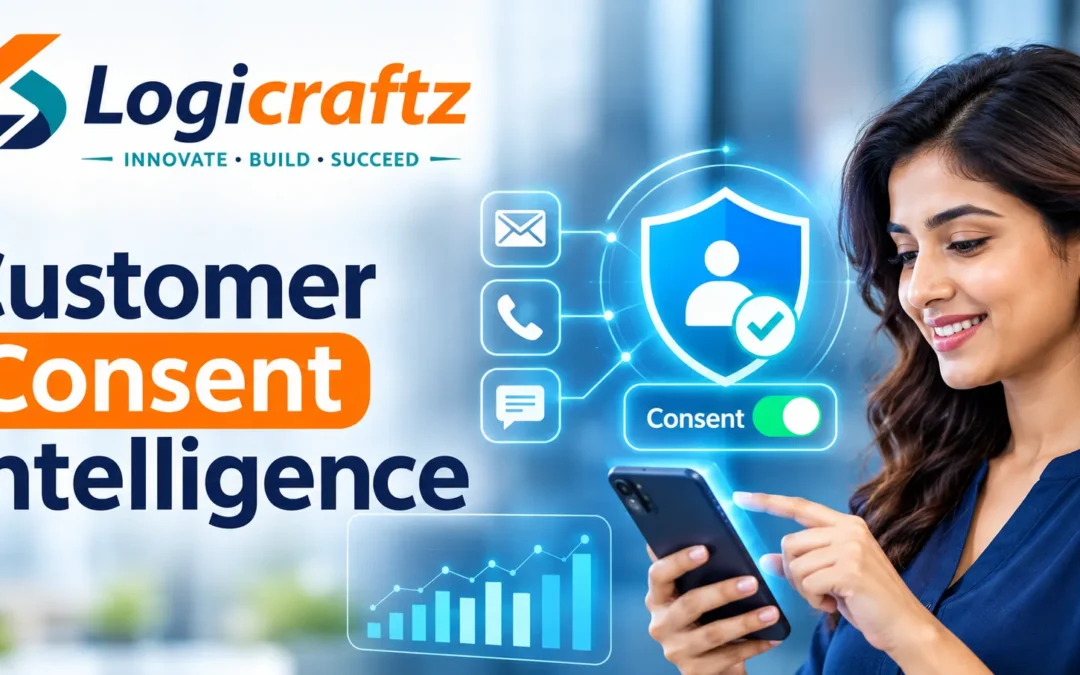
Customer Consent Intelligence: How Privacy-First CRM Will Shape Personalization in 2027
Businesses increasingly depend on customer data to understand buying behaviour, improve service and deliver relevant communication. A CRM platform may contain contact details, purchase history, website interactions, service requests, sales conversations and marketing preferences. However, having access to customer information does not automatically mean a business can use it for every possible purpose.
Customer Consent Intelligence is an approach to customer data management that connects permission, communication preferences, processing purposes and privacy controls with everyday CRM operations. It helps organizations understand what information they can use, why they can use it, which communication activities are permitted and what must change when a customer updates their preferences or withdraws consent.
As businesses prepare for 2027, privacy-first CRM personalization will become an important consideration for organizations using AI-powered marketing, customer segmentation, automated sales workflows and omnichannel engagement. The challenge is not simply collecting more customer information. It is using appropriate information for appropriate purposes while respecting customer choices and applicable legal requirements.
This shift requires a more disciplined approach to CRM architecture. Consent records should not remain isolated in website forms or marketing tools. They need to influence customer profiles, campaign eligibility, AI recommendations, communication workflows and integrations with other enterprise systems.

What Is Customer Consent Intelligence?
Customer Consent Intelligence is the ability of a business system to interpret, manage and apply customer permissions and communication preferences when personal data is collected, accessed, analyzed or used for customer engagement.
It combines consent records, purpose information, communication-channel preferences, data governance rules and workflow automation. Instead of treating consent as a checkbox captured during registration, the CRM uses permission information as an operational control throughout the customer lifecycle.
For example, a customer may agree to receive service-related emails but decline promotional WhatsApp messages. A consent-aware CRM should distinguish these choices. It should not assume that permission for one communication channel automatically authorizes marketing through every other channel.
Consent Management Versus Customer Preference Management
Consent management and preference management are connected, but they are not identical.
Consent management records permission where consent is the applicable legal basis or where a specific consent requirement applies. Preference management captures choices such as preferred communication channels, language, message frequency and content interests. Other legal bases or obligations may apply to certain processing activities, depending on the relevant jurisdiction and context.
A well-designed CRM should maintain these concepts separately. A customer preference does not automatically create a legal basis for processing, and a consent record should not be interpreted more broadly than the purpose and scope it actually covers.
| Area | Consent Management | Preference Management |
|---|---|---|
| Main purpose | Record and apply permission for specified processing activities where required | Capture how customers want to interact with the business |
| Examples | Marketing consent, permission for a specified data use | Preferred language, channel, message frequency |
| CRM responsibility | Maintain evidence, scope, status and withdrawal history | Apply customer-selected communication settings |
| Operational impact | Controls whether a consent-based activity can proceed | Shapes how an otherwise permitted interaction is delivered |
The distinction matters because a CRM that stores only a general marketing preference may not provide sufficient evidence of a valid consent where consent is legally required.
Why Privacy-First CRM Will Matter More in 2027
Customer data has become a valuable business asset, but its value depends on responsible use. Organizations increasingly combine information from websites, mobile applications, sales teams, support platforms, online stores and marketing systems. Without consistent governance, the same customer may have different permissions recorded across different applications.
Customers Expect More Control Over Their Information
Customers are becoming more aware of how businesses collect and use personal information. They may want personalized product recommendations but not frequent promotional messages. They may prefer email for product updates and WhatsApp only for order notifications.
Privacy-first CRM systems can make these choices easier to manage. When customers can understand and change their preferences without unnecessary friction, businesses can build communication practices around clearer expectations.
More AI Means Greater Responsibility for Data Use
AI-powered CRM platforms can analyze customer interactions, summarize conversations, identify patterns and recommend personalized actions. However, AI capability does not create permission to process information for any purpose.
A personalization engine should receive only the data it is authorized to use for the task. It should also respect restrictions on marketing, profiling, data sharing and other processing activities where applicable.
Multiple Channels Increase Operational Complexity
A business may communicate with customers through email, SMS, WhatsApp, telephone, website notifications, mobile applications and social media platforms. Each channel may have different technical, regulatory and customer preference requirements.
A customer who unsubscribes from promotional email should not continue receiving the same promotional campaign through an integrated messaging platform simply because the second system did not receive the preference update.
Privacy Governance Is Becoming an Enterprise Architecture Issue
Consent management is no longer only a marketing department responsibility. It affects CRM configuration, website forms, customer identity management, API integrations, data warehouses, analytics platforms, AI services and vendor relationships.
Organizations need a consistent operating model that connects customer choices with the systems that collect, store and use personal data.
How Consent-Aware CRM Personalization Works
Consent-aware personalization combines customer information with permission and purpose checks before a personalized action is executed. The system should not simply ask what content is most relevant. It should also determine whether the intended use and communication method are permitted.
1. Collect Customer Information Transparently
Customer information may enter a CRM through website enquiries, product registrations, online purchases, customer support interactions, event registrations or sales conversations.
At the collection stage, the organization should explain the relevant processing purposes and provide the appropriate privacy information. Where consent is required, the request should clearly describe the purpose and the information involved. A broad statement hidden inside general terms and conditions is not a substitute for a properly presented consent request.
2. Record Permission with Context
A useful consent record should contain enough information to establish what happened and what the customer agreed to. Depending on the use case, important fields may include:
- Customer or contact identifier.
- Purpose of the processing activity.
- Relevant data categories.
- Communication channel, where channel-specific permission is required.
- Consent status and timestamp.
- Collection source, such as a website form or application.
- Version of the notice or consent wording presented.
- Evidence of the customer’s affirmative action.
- Withdrawal or preference-change history.
The organization should retain only the evidence and information needed for its legal, operational and accountability requirements, according to its retention policy.
3. Apply Purpose-Based Data Access
Customer information should be made available according to the purpose for which it is being processed and the user’s authorized role. A support representative may need access to order information to resolve a service request, while a marketing workflow may require different information for a permitted campaign.
Role-based access control, purpose-based restrictions and data minimization help prevent unnecessary exposure of customer information.
4. Check Communication Eligibility Before Sending
Before an automated message is sent, the CRM should check the relevant customer permissions, channel preferences, suppression records and applicable communication rules.
For example, a customer may allow service notifications but reject promotional campaigns. The system should permit an authorized service notification while suppressing promotional content, provided the communication is correctly classified and permitted under applicable law.
5. Update Connected Systems When Preferences Change
Consent and preference updates should propagate to connected systems through reliable integrations. A change recorded in the CRM may need to update marketing automation, email platforms, customer data platforms and messaging applications.
Where immediate synchronization is not technically possible, the business should define controls to prevent a campaign from using outdated permission information. A central suppression mechanism or pre-send eligibility check can reduce the risk of sending prohibited communications during synchronization delays.
6. Maintain an Auditable Record
Businesses should be able to reconstruct the relevant history of a permission decision. This includes the original record, later changes, the source of the update and the systems affected.
An audit trail supports internal reviews, complaint handling and accountability. It also helps identify integration failures that might otherwise remain hidden.
The Role of AI in Customer Consent Intelligence
AI can make consent-aware CRM systems more responsive by helping interpret customer requests, identify inconsistencies and coordinate privacy-related workflows. It should operate within defined rules rather than independently deciding that a customer’s permission can be expanded.
Understanding Natural-Language Preference Requests
Customers do not always use formal privacy terminology. They may write, “Please stop sending offers on WhatsApp, but keep my order updates coming.” An AI-enabled CRM assistant can identify the request as a change to promotional WhatsApp communication while preserving the distinction between marketing and service messages.
Where the request is ambiguous, the system should ask for clarification rather than make an irreversible assumption.
Detecting Consent Conflicts
An AI-assisted governance tool can identify conflicting records, such as one platform showing an active marketing permission while another contains a recent withdrawal. It can flag the conflict and prevent affected campaign activity until the authoritative status is confirmed.
Supporting Privacy-Aware Customer Segmentation
AI can help create customer segments using permitted data and approved purposes. For example, a business may identify customers interested in a particular product category, but it should verify that the intended marketing activity and communication channel are permitted before activating the segment.
Recommending Compliant Next Actions
An AI agent may recommend that a salesperson use a permitted service channel, request updated preferences or route a privacy request to an authorized team. It can also help prepare a response using approved organizational information.
It should not independently interpret complex legal questions, invent a lawful basis or override a customer’s withdrawal. High-impact or uncertain decisions should be routed to qualified personnel.
Automating Privacy Operations
AI can support repetitive activities such as classifying incoming privacy requests, identifying relevant CRM records, routing cases and preparing status summaries. The organization remains responsible for verifying the action, meeting applicable deadlines and ensuring that the correct process is followed.

Managing Customer Consent Across Email, SMS, WhatsApp and Other Channels
Omnichannel personalization requires a consistent understanding of customer permissions across the communication ecosystem. A central CRM record can help coordinate these permissions, but the system must account for differences between channels and legal requirements.
Email Marketing
Email systems should distinguish promotional messages from operational or transactional communications. The applicable legal rules may differ depending on the recipient, jurisdiction, message purpose and relationship with the organization.
For example, an order confirmation is different from a promotional newsletter. A business should not automatically use an email address collected to deliver a receipt as permission to send unrelated promotional campaigns.
SMS Communication
SMS may be used for delivery alerts, appointment reminders, account notifications or marketing. The CRM should identify the message purpose and apply the appropriate permission and suppression rules.
Where separate permission is required for marketing text messages, a general preference for receiving company updates should not be assumed to cover SMS.
WhatsApp Business Messaging
WhatsApp communication may include customer support, order updates, appointment coordination and promotional messages. Businesses should consider applicable messaging platform policies, template requirements, customer expectations and relevant legal obligations.
A customer who opts out of promotional messages should be removed from the relevant marketing workflow. The business should not treat a service conversation as blanket permission for future promotional campaigns.
Telephone and Contact-Centre Communication
Telephone preferences may need to distinguish service calls, requested callbacks and marketing calls. Automated dialling and recorded communication may introduce additional requirements depending on the jurisdiction.
CRM workflows should make the purpose of a call visible to the employee and prevent contact where the relevant restriction applies.
Website and Mobile Application Personalization
Websites and applications may use account information, cookies, analytics technologies and behavioural signals to personalize experiences. Different technologies and processing activities may have different legal requirements.
Organizations should not assume that accepting a website cookie banner automatically provides permission for every type of CRM profiling or direct marketing activity. Consent and preference information should be mapped to the specific purposes and technologies involved.
Social Media and Advertising Platforms
Customer lists may be used for audience matching, advertising suppression or campaign activation. These activities can involve data sharing or other processing that requires separate assessment.
Businesses should verify the legal basis, platform terms, data-sharing arrangements and customer expectations before transferring personal data to advertising platforms.
| Channel | Example Use | CRM Control to Consider |
|---|---|---|
| Newsletters and product updates | Purpose, marketing eligibility and unsubscribe status | |
| SMS | Alerts and promotional messages | Channel-specific rules and suppression |
| Service updates and customer engagement | Message purpose, opt-out and platform policy | |
| Telephone | Requested callbacks and sales calls | Call purpose and applicable contact restrictions |
| Website | Personalized content and analytics | Purpose-specific privacy and cookie controls |
| Advertising | Custom audiences and remarketing | Data-sharing assessment and audience suppression |
Privacy-First Personalization Without Over-Collecting Customer Data
Personalization does not require collecting every available customer detail. In many cases, a smaller set of accurate and relevant information can support a useful customer experience.
Privacy-first personalization focuses on using data that is appropriate for a defined purpose, limiting unnecessary collection and controlling access to sensitive information.
Use Purpose-Based Customer Segmentation
Instead of building broad profiles from every interaction, businesses should define the specific purpose of each segment. A product education segment, for example, may require a customer’s product interest and communication preference. It may not require unrelated information about their personal activities.
Prefer Relevant First-Party Data
First-party data is information a business collects directly through its own customer interactions, subject to applicable legal requirements. Examples include purchase history, service requests, product registrations and customer-selected preferences.
First-party data can provide useful context because it originates from the business relationship. However, direct collection does not automatically make every subsequent use lawful or expected.
Apply Data Minimization
Data minimization means limiting collection and processing to what is necessary for the specified purpose. A CRM campaign should not request additional personal information simply because the system has the technical ability to store it.
Separate Sensitive and General Customer Information
Some information may create higher privacy or security risks. Businesses should identify sensitive categories under applicable laws, restrict access and avoid using such information for personalization unless the processing is properly justified and permitted.
Make Personalization Explainable
Customers should not be surprised by the way a business uses their information. Where appropriate, organizations should explain why they are receiving a recommendation, what information supports the interaction and how they can change their preferences.
Customer Consent Intelligence and India’s DPDP Framework
For businesses operating in India, the Digital Personal Data Protection Act, 2023 and the Digital Personal Data Protection Rules, 2025 are important considerations when designing customer data systems.
The Act establishes a framework for processing digital personal data and defines roles including Data Fiduciary, Data Principal and Data Processor. It addresses lawful processing, notice, consent, individual rights, security and accountability.
What the DPDP Act Says About Consent
Section 6 of the Act describes consent as free, specific, informed, unconditional and unambiguous, with a clear affirmative action. Consent is tied to the specified purpose and should be limited to personal data necessary for that purpose.
Where consent is the basis for processing, the Act provides for withdrawal and requires the ease of withdrawal to be comparable to the ease of giving consent. Withdrawal does not retrospectively invalidate processing that was lawful before withdrawal, but subsequent processing must be assessed under the applicable provisions.
This has direct implications for CRM design. A system should be able to connect a consent record to its purpose, preserve relevant evidence, register withdrawal and coordinate the required changes across connected systems.
DPDP Rules 2025: Why the Implementation Timeline Matters
The Government of India notified the Digital Personal Data Protection Rules, 2025 in the Official Gazette on 13 November 2025. The Rules have a phased commencement schedule rather than one single effective date for every provision.
Under Rule 1 of the notified Rules:
- Rules 1, 2 and 17 to 21 commenced on publication.
- Rule 4 is scheduled to commence one year after publication.
- Rules 3, 5 to 16, 22 and 23 are scheduled to commence eighteen months after publication.
The Act also has phased commencement provisions. The Gazette notification and commencement schedule should be checked when planning implementation. As of November 2026, businesses should prepare for the provisions scheduled to take effect in May 2027 rather than assume every requirement is already operational.
Practical Implications for CRM and Marketing Systems
The Rules address matters such as clear notices, consent withdrawal mechanisms, security safeguards, breach notifications and retention-related requirements. The exact obligations depend on the relevant provision, commencement date, business role and processing context.
Businesses should review their privacy notices, collection forms, consent evidence, data processor arrangements, access controls and retention processes in preparation for applicable requirements.
The DPDP Act also recognizes the concept of a Consent Manager: a registered entity that can provide an accessible, transparent and interoperable point through which individuals can give, manage, review and withdraw consent. Organizations should distinguish this statutory concept from an ordinary CRM preference centre or an internal consent database.
Consent Is Not the Only Possible Legal Basis
A critical implementation point is that the DPDP Act provides for processing on the basis of consent or certain legitimate uses specified in the Act. A business should not request consent mechanically for every processing activity or assume that consent is the correct legal basis in every situation.
For example, information needed to fulfil a customer’s order may be processed under the applicable legal framework for that purpose. Promotional communication is a separate activity and should be assessed independently. Businesses should obtain qualified legal advice when determining the appropriate basis for each processing operation.
For the official legal text, refer to the Digital Personal Data Protection Act, 2023 and the Digital Personal Data Protection Rules, 2025.
GDPR and Global Privacy Considerations for International CRM Operations
Businesses serving customers across multiple countries should not assume that compliance with one privacy framework automatically satisfies every other applicable requirement.
The General Data Protection Regulation, or GDPR, applies to relevant processing activities within its territorial scope. It sets specific conditions for valid consent, including that consent must be freely given, specific, informed and unambiguous. Individuals must also be able to withdraw consent where consent is the legal basis.
Purpose-Specific Permission
Under GDPR principles, consent for one purpose should not be treated as permission for unrelated processing. If a business wants to use information for different purposes, it should assess whether separate choices are needed.
Channel-Specific Marketing Requirements
Electronic marketing rules may introduce additional requirements beyond general data protection law. For example, the UK’s Privacy and Electronic Communications Regulations contain specific rules for electronic marketing, with differences based on recipient type and circumstances.
Organizations should not assume that consent for one channel automatically covers another. Email, text messages, telephone calls and other communication methods may be subject to different requirements.
Cross-Border Data Flows
International CRM deployments may involve cloud hosting, marketing platforms, analytics services and support teams located in different countries. Businesses should review the applicable transfer rules, processor contracts, security controls and data access arrangements.
A privacy-first CRM architecture should therefore support jurisdiction-aware policies rather than rely on a single global checkbox.
For further reference, consult the European Commission’s GDPR information and the UK Information Commissioner’s Office direct marketing guidance.
The Technology Architecture of a Consent-Aware CRM
A reliable consent-aware CRM requires more than a field that stores an opt-in status. It needs a connected architecture that can maintain permission evidence, apply rules and synchronize changes across systems.
1. Centralized Consent and Preference Records
The CRM or a connected consent management service should maintain a structured record of customer choices. It should support multiple purposes, channels, statuses and timestamps instead of relying on one universal marketing consent field.
2. Customer Identity Resolution
A customer may interact through different email addresses, telephone numbers, devices or account identifiers. Identity resolution helps connect relevant records while avoiding incorrect merges between different people.
Consent information must be associated with the correct individual and identifier. A mistaken identity match can cause one customer’s preferences to be applied to another customer’s record.
3. Consent Policy and Rules Engine
A policy engine can evaluate whether a proposed activity is permitted under the configured rules. It may check purpose, legal basis, channel, consent status, customer preference, jurisdiction and suppression records.
The rules engine should be authoritative for execution decisions. An AI model may help interpret a request, but the final permission check should rely on validated policy logic and current records.
4. API Integration and Event Synchronization
APIs and event-driven integrations allow systems to exchange permission updates. When a customer changes a preference, the CRM can publish an event that connected marketing platforms consume.
Integration design should account for authentication, access scopes, retries, failed events, duplicate messages and synchronization delays. The organization should also define which system is authoritative when records conflict.
5. Role-Based Access and Security
Employees should access only the customer information required for their responsibilities. A marketing user may need campaign eligibility information, while a privacy administrator may need access to consent evidence and request history.
Encryption, access logging, secure backups, vulnerability management and vendor security reviews support the protection of customer data.
6. Audit Trail and Retention Controls
Consent events should be traceable, including the original permission, subsequent changes and withdrawal. Retention policies should distinguish between customer profile data, consent evidence, suppression records and information that must be retained for other legal or operational reasons.
Deleting a marketing profile does not necessarily mean every related record should be deleted immediately. The organization should assess the applicable retention and legal requirements, including whether a minimal suppression record is needed to prevent future unwanted communication.

Practical Industry Applications of Customer Consent Intelligence
Consent-aware CRM design is relevant across industries, but the data collected and communication purposes differ according to the customer relationship.
Manufacturing and Industrial Businesses
Manufacturers may manage distributors, dealers, procurement teams, service engineers and institutional buyers. A CRM can record contact preferences for product announcements, service updates, training invitations and account communication.
For example, a distributor may want technical product updates by email but prefer urgent service coordination by telephone. The CRM can maintain these preferences and help sales and support teams apply them consistently.
Retail and E-Commerce
Retailers may use purchase history, loyalty information and product interests to personalize offers. A privacy-aware system should distinguish order-related communication from promotional campaigns and apply the relevant customer choices before activating an audience.
Healthcare and Wellness Services
Healthcare-related organizations may process highly sensitive information. Personalization involving health information requires careful assessment of applicable legal rules, security requirements and access restrictions. Marketing teams should not automatically receive access to clinical or sensitive service records.
Financial Services
Financial organizations may use CRM systems for service communication, product enquiries and customer relationship management. Personal data access, marketing eligibility, retention and automated decision-making should be governed according to the applicable regulatory framework.
ERP and CRM Software Providers
Technology providers often collect business contact information through product enquiries, webinars, demos and implementation discussions. A consent-aware CRM can separate service-related communication from promotional updates and manage customer preferences across email, phone and messaging platforms.
Education and Professional Training
Education providers may communicate through admission updates, course information, event invitations and promotional campaigns. A centralized preference model can help distinguish essential course communication from optional marketing messages.
Common Consent Management Mistakes Businesses Should Avoid
Using One Checkbox for Every Purpose
A single checkbox that combines account registration, promotional marketing, data sharing and unrelated processing can create confusion. Consent requests should be designed around the actual purposes and legal requirements.
Assuming Consent Never Expires or Changes
Customer choices can change. A CRM should support updates, withdrawals and changes to communication preferences rather than treating the original record as permanently valid for every future campaign.
Keeping Consent Records Only in Marketing Software
When the CRM, support platform and messaging tools maintain disconnected records, teams may act on inconsistent information. A clear source of truth and reliable synchronization are essential.
Failing to Distinguish Service Messages from Marketing
Organizations should classify communications according to their actual purpose. A promotional offer should not be labelled as a service notification merely to bypass a marketing restriction.
Ignoring Third-Party Data Sources
Purchased lists, partner referrals and externally sourced contact records require careful assessment. Publicly available information does not automatically authorize every form of direct marketing or profiling.
Allowing AI to Override Privacy Rules
An AI assistant should not be allowed to infer permission from customer interest or engagement. A customer visiting a product page is not automatically agreeing to receive promotional messages through every channel.
Not Testing Withdrawal Workflows
A preference centre may appear to work while connected systems continue sending campaigns. Businesses should test withdrawal scenarios across all relevant platforms, including delayed synchronization and failed integration events.
Implementation Roadmap: Building Customer Consent Intelligence into CRM
Businesses should introduce consent intelligence through a structured implementation process. The objective is to connect legal requirements, customer experience and technology controls without creating unnecessary operational complexity.
Step 1: Map Customer Data and Processing Purposes
Identify the personal data collected, where it enters the organization, which systems store it, who accesses it and why it is processed. Include CRM, website forms, marketing platforms, support applications and third-party integrations.
Build a processing inventory that distinguishes service delivery, marketing, analytics, personalization and other business purposes.
Step 2: Review Applicable Legal Requirements
Identify the jurisdictions in which customers are located and the laws relevant to the organization’s activities. Determine where consent is required and where another lawful basis or specific exception may apply.
Legal review should cover marketing communication, cookies and tracking, profiling, international transfers, retention and customer rights.
Step 3: Design Clear Consent and Preference Options
Write customer-facing notices in plain language. Avoid combining unrelated purposes or using unclear statements. Where separate choices are appropriate or legally required, make them understandable and accessible.
Provide a practical method for customers to review and update their preferences.
Step 4: Configure CRM Data Fields and Consent Events
Define a consistent data model for purpose, channel, status, source, timestamp, notice version and withdrawal. Establish how the system records changes and how users can view relevant evidence.
Step 5: Connect Marketing and Communication Platforms
Integrate the CRM with email, SMS, WhatsApp, website and customer support platforms where required. Define synchronization rules, event ownership, error handling and campaign suppression controls.
Step 6: Introduce AI with Defined Boundaries
Use AI for request classification, data quality alerts, customer preference summaries and workflow recommendations. Keep final execution subject to the policy engine and permissions configured by the organization.
Step 7: Test Real Customer Scenarios
Test scenarios such as marketing opt-in, channel-specific opt-out, consent withdrawal, preference updates, duplicate customer records, identity mismatches and failed API synchronization.
Verify that the correct systems respond and that prohibited communication is suppressed.
Step 8: Monitor and Improve Continuously
Review consent record quality, synchronization failures, customer complaints, privacy requests and campaign suppression results. Update policies when business processes, legal requirements or technology platforms change.
How to Measure Privacy-First CRM Performance
Consent intelligence should be evaluated through operational, customer experience and governance indicators. A high number of stored consent records does not necessarily indicate good privacy management.
Consent Record Completeness
Measure the percentage of relevant records containing required information such as purpose, source, timestamp and status. Define completeness according to the organization’s legal and operational requirements.
Preference Synchronization Success
Track whether consent and preference updates reach connected systems within the organization’s defined service level. Monitor failed events, processing delays and conflicting records.
Withdrawal Processing Time
Measure the time between a customer withdrawal request and the completion of required downstream actions. This should include relevant CRM, marketing and communication systems.
Unauthorized or Incorrect Communication Incidents
Track complaints, messages sent after applicable opt-outs, duplicate campaign communication and incorrect channel usage. Investigate root causes rather than treating each incident as an isolated marketing error.
Privacy Request Handling
Monitor how efficiently the organization receives, verifies, routes and resolves customer requests. The applicable rights and timelines depend on the relevant legal framework.
Personalization Relevance
Evaluate engagement and customer feedback while ensuring that improved campaign performance does not come at the expense of privacy. Compare outcomes across customer segments and channels without collecting unnecessary information.
Access and Security Monitoring
Review access logs, permission changes, unusual data exports and unauthorized system activity. Monitor third-party integrations and ensure that access is limited to the information required for each purpose.
What Privacy-First CRM Personalization Could Look Like in 2027
By 2027, privacy-aware CRM systems may increasingly combine centralized permission records, AI-assisted customer understanding and automated policy enforcement. The direction is toward more context-aware personalization, but the exact capabilities will vary across vendors, industries and regulatory environments.
Real-Time Preference-Aware Communication
CRM platforms may increasingly check current customer preferences before activating campaigns or sending automated messages. This can reduce the gap between a customer changing a preference and the business applying that change across its communication channels.
AI Agents with Permission-Aware Access
AI agents may receive access to customer information through purpose-specific permissions. A service agent could retrieve information needed to resolve an issue without automatically accessing unrelated marketing or sensitive records.
More Transparent Personalization
Businesses may provide clearer explanations of why customers receive particular recommendations or communications. Customers may also gain easier access to preference controls and privacy-related information.
Stronger Integration Between CRM and Consent Systems
Consent information may become a shared operational signal across customer data platforms, CRM systems, analytics tools and marketing applications. This will require consistent identifiers, reliable APIs and clear ownership of permission records.
Privacy as a Competitive Trust Factor
Businesses that communicate clearly, respect preferences and avoid unnecessary data collection may strengthen customer confidence. Privacy should not be treated only as a compliance expense. It is also part of the customer experience and the organization’s reputation.
However, privacy-first technology will not eliminate all risk. Incorrect identity matching, poor data quality, insecure integrations and misleading AI outputs can still create problems. Continuous testing and accountability will remain essential.
How Logicraftz Can Support Privacy-Aware CRM and Digital Transformation
Implementing Customer Consent Intelligence requires coordination between CRM architecture, business workflows, customer communication and enterprise data management. Organizations need systems that support their actual operating requirements rather than relying on disconnected tools and manual processes.
Logicraftz Solutions LLP works across CRM software, ERP software solutions, ERPNext, Odoo ERP, website development, business automation, HRMS, accounting, inventory management, manufacturing management and AI-powered business solutions.
CRM Workflow and Customer Data Management
CRM workflows can be structured to manage customer records, communication preferences, lead activities, service interactions and marketing processes. A well-designed data model helps teams maintain more consistent customer information.
Website and CRM Integration
Website forms, enquiry pages and customer portals can be connected with CRM systems to capture relevant information and route it through defined workflows. Collection forms should present appropriate privacy information and record customer choices accurately.
Business Automation and System Integration
Connected systems can help coordinate customer information across CRM, ERP and other business applications. Integration design should include access controls, data validation, error handling and clear ownership of records.
AI-Powered Business Solutions
AI can support customer service, information classification, workflow recommendations and operational reporting. Its use should be governed by data permissions, security controls and human oversight where necessary.
To explore CRM, ERP and business automation solutions, visit Logicraftz Solutions LLP.
For business enquiries and solution discussions:
- Website: https://logicraftz.com
- Phone: +91 2231982472
- Email: info@logicraftz.com
- LinkedIn: Logicraftz Solutions LLP
Frequently Asked Questions About Customer Consent Intelligence
What is Customer Consent Intelligence?
Customer Consent Intelligence is the ability of a CRM or connected business system to manage and apply customer permissions, processing purposes and communication preferences. It helps businesses use customer information according to defined rules and applicable legal requirements.
Why does a CRM need consent management?
A CRM needs consent management to maintain evidence of customer choices, control consent-based processing and coordinate permission updates across connected systems. It also helps prevent communication workflows from using outdated or incorrect preference information.
What is a privacy-first CRM?
A privacy-first CRM is designed to support responsible customer data collection, access, use, retention and protection. It incorporates controls such as purpose-based processing, data minimization, access permissions, consent records and customer preference management.
How does consent-aware personalization work?
Consent-aware personalization checks relevant permissions, processing purposes and customer preferences before using information for a personalized activity. It can help determine which content, audience segment or communication channel is appropriate for a particular customer.
Can customers choose different communication channels?
Yes. A business can provide channel preference controls for email, SMS, WhatsApp, telephone and other communication methods. The organization must also assess whether separate consent or other legal requirements apply to each channel and purpose.
What happens when a customer withdraws consent?
When consent is the basis for processing, the organization must handle withdrawal according to the applicable law. CRM workflows should record the request, update the relevant status and coordinate required changes with connected processors and communication platforms. Other lawful processing may continue only where independently permitted.
Is customer consent the same as a marketing preference?
No. Consent is a legal concept that may provide a basis for specified processing where applicable. A marketing preference records how a customer wants to receive communication. Businesses should maintain these records separately and avoid treating a preference as automatic legal authorization.
Can AI manage customer consent automatically?
AI can help classify requests, identify conflicting records and coordinate workflow actions. However, the system should rely on validated policy rules and current permission records for execution. Ambiguous or legally complex cases should be escalated to authorized personnel.
How does the DPDP Act affect CRM systems in India?
The Digital Personal Data Protection Act, 2023 establishes requirements relating to lawful processing, notice, consent, individual rights and accountability. The DPDP Rules, 2025 provide additional operational requirements with phased commencement dates. Businesses should review the applicable provisions and implementation timeline before configuring CRM processes.
Can privacy-first CRM improve customer trust?
A privacy-first CRM can support customer trust by making data use more transparent, respecting communication choices and reducing unwanted interactions. Trust also depends on actual business practices, security, service quality and how the organization responds to customer requests.
How should a business start implementing consent intelligence?
Start by mapping personal data, processing purposes and connected systems. Review applicable legal requirements, define consent and preference fields, configure customer controls, integrate communication platforms and test withdrawal workflows before expanding automation.
Build Customer Trust Through Privacy-First CRM with Logicraftz
Customer Consent Intelligence is changing how organizations approach personalization, customer data and digital communication. As businesses prepare for 2027, the focus should move beyond collecting more information toward managing customer choices with clarity, consistency and accountability.
A privacy-aware CRM connects customer permissions with marketing workflows, AI-powered insights and enterprise applications. When supported by reliable data, secure integrations and well-defined governance, it can help businesses deliver more relevant interactions while respecting customer expectations.
Explore CRM, ERP and digital transformation solutions with Logicraftz Solutions LLP.
Website: logicraftz.com
Phone: +91 2231982472
Email: info@logicraftz.com
Stay Connected with Logicraftz Solutions LLP
Explore insights and updates on CRM software, ERP solutions, AI-powered automation, website development and digital transformation.