

Call Logicraftz Professionals +91 2231982472 for Website Design Strategies, B2B Website Design, conversion-focused pages, lead capture systems, and scalable website growth.
Website Design Strategies: 6 Powerful Website Design Strategies for B2B Companies in India
A practical guide to B2B Website Design, conversion-focused website design, lead capture, proof sections, speed, scalability, and revenue-focused growth.
Introduction
Website Design Strategies are extremely important for B2B companies in India because your website is either your best salesperson or your biggest bottleneck. Whether you are a manufacturing exporter in Surat, a SaaS startup in Bangalore, a logistics company in Mumbai, a fintech firm in Gurugram, or an IT services provider in Hyderabad, your website is doing more selling than you may realize.
In 2026, most B2B buyers research deeply before speaking with a sales team. They compare vendors, check proof, evaluate pricing, review capabilities, and shortlist companies online. That means your website must communicate trust, clarity, expertise, and value quickly.
A B2B Website Design approach should not focus only on looking modern. It should help generate qualified leads, support sales conversations, improve marketing ROI, and guide decision-makers toward action.
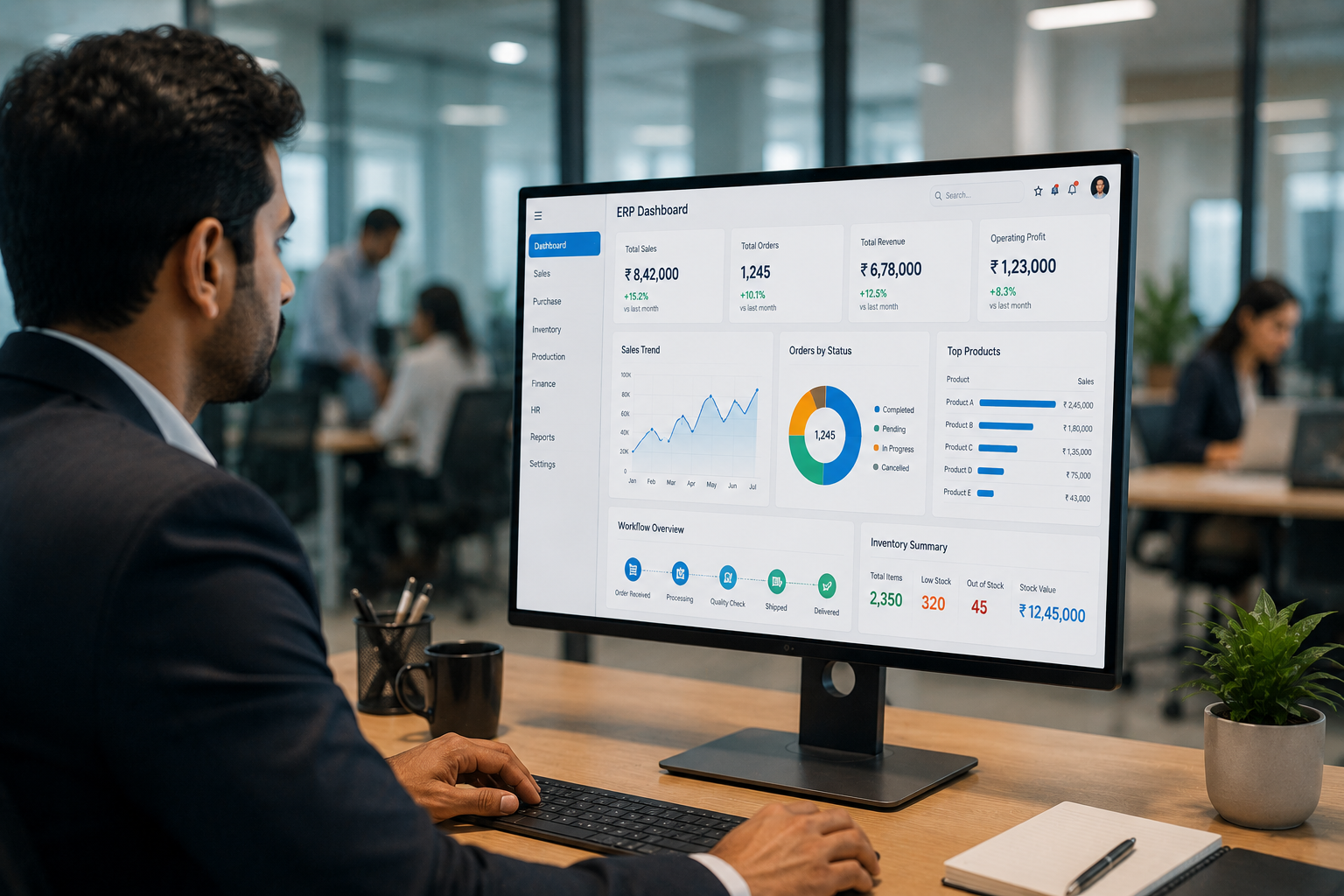
Powerful website design strategies help B2B companies improve trust, leads, and sales pipeline.
Table of Contents
- Why B2B Website Design Needs a Different Approach
- 1. Build for One Primary Conversion Goal
- 2. Speak to Multiple Stakeholders
- 3. Use Proof, Metrics, and Social Proof
- 4. Make Lead Capture Intelligent
- 5. Prioritise Speed, Mobile, and Core Web Vitals
- 6. Design for Scalability
- Common B2B Website Design Mistakes
- Frequently Asked Questions
Why B2B Website Design Needs a Different Approach
B2B buying is complex. Multiple stakeholders are often involved, including finance, procurement, operations, IT, leadership, and end users. Sales cycles are longer, deal values are higher, and the decision-making process is more detailed.
Many Indian B2B websites still look like digital brochures. They have vague service descriptions, weak calls-to-action, generic contact forms, and little proof. A modern B2B website should be designed around clarity, credibility, conversion, and sales enablement.
Attract decision-makers instead of unqualified enquiries.
Make every rupee spent on ads, SEO, LinkedIn, and events work harder.
Use proof, case studies, metrics, and credibility blocks to build confidence.
Build a website structure that supports more services, industries, and locations.
1. Build for One Primary Conversion Goal
Most B2B websites try to do too many things at once. They push blog posts, awards, services, newsletter forms, brochures, and contact links on the same page. This creates confusion, and confused visitors usually do not convert.
A strong Conversion-Focused Website Design starts with one primary goal and one secondary goal for each major page. Your homepage may focus on booking a discovery call, while a service page may focus on requesting a quote or downloading a capability deck.
Primary Goal Examples
- Book a discovery call
- Request a quote
- Schedule a demo
- Request a site assessment
- Download a capability deck
Secondary Goal Examples
- Download a case study
- View integrations
- Explore pricing
- Read industry use cases
- Watch a product demo
How Logicraftz Solutions LLP helps: We run a conversion-first workshop with your sales and marketing teams to define page goals, buyer actions, lead quality criteria, and conversion paths.
2. Speak to Multiple Stakeholders Without Sounding Generic
In B2B, the person visiting your website may not be the final decision-maker. A technical buyer may care about integrations and implementation. A finance buyer may care about ROI and total cost. An operations buyer may care about efficiency and ease of use.
Your website must answer the questions of each stakeholder without becoming confusing. This does not mean creating three versions of every page. It means structuring content so each buyer can quickly find what matters to them.
Useful Stakeholder Sections
- For Operations Leaders
- For Finance Heads
- For IT Teams
- For Procurement Managers
- For Founders and Leadership
Content Assets to Include
- ROI calculators
- Implementation timelines
- Integration pages
- Security and compliance details
- Industry-specific case studies
- Clear service descriptions
How Logicraftz Solutions LLP helps: We map buyer journeys for each stakeholder and build a B2B website structure that answers objections before prospects reach your sales team.
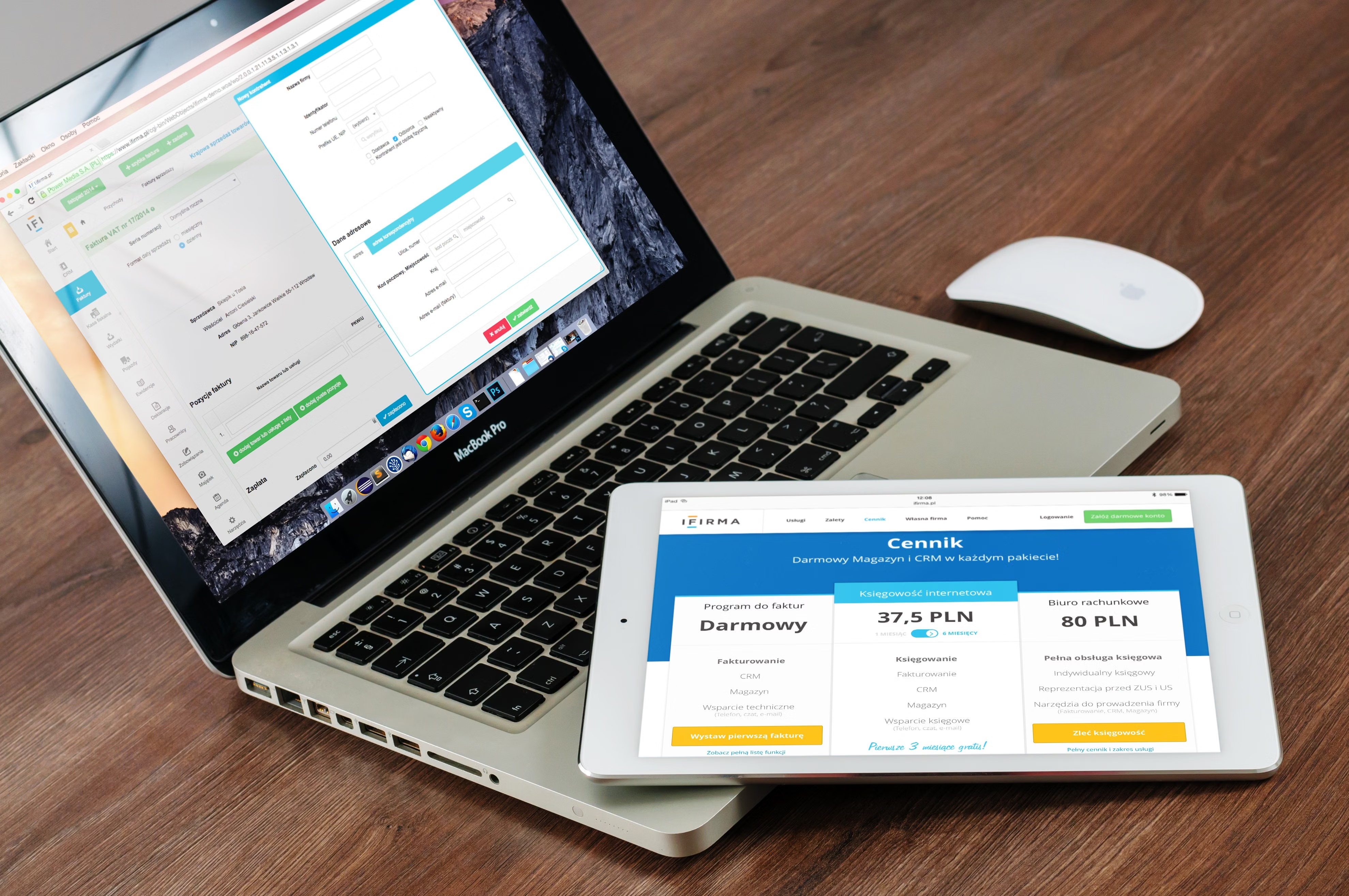
B2B websites should answer the needs of finance, operations, IT, leadership, and end users.
3. Use Proof, Metrics, and Social Proof
B2B buyers do not want promises. They want evidence. Your website should make it easy to find proof that your company can deliver results.
Proof should not be hidden on one testimonial page. It should appear near relevant offers, service sections, pricing sections, demo forms, and industry pages. This helps reduce hesitation at the exact moment a visitor is considering action.
Proof Elements to Add
- Case studies with measurable outcomes
- Client logos where appropriate
- Testimonials from decision-makers
- Industry certifications
- Before-and-after stories
- Uptime, savings, growth, or productivity metrics
- Project timelines and delivery examples
Example proof format: “Reduced manual reporting time by 42% in 90 days” is stronger than “We improve efficiency.” Metrics make your claims believable.
How Logicraftz Solutions LLP helps: We turn your business wins into conversion-ready proof assets, including case study templates, credibility sections, ROI blocks, and testimonial layouts.
4. Make Lead Capture Intelligent
A B2B lead form is not just a contact form. It is a qualification and routing system. The right form asks enough questions to understand lead quality, urgency, industry, company size, and use case without overwhelming the visitor.
For early-stage visitors, short forms work better. For demo, quote, or assessment requests, slightly longer forms can help the sales team receive better context.
Lead Capture Best Practices
- Use 3 to 5 fields for top-of-funnel offers
- Use 6 to 9 fields for quote, demo, or assessment requests
- Add fields like company size, industry, urgency, and use case
- Use conditional logic to keep forms clean
- Integrate with CRM tools such as Zoho, HubSpot, or Salesforce
- Trigger WhatsApp or email automation after submission
- Route leads to the right salesperson automatically
How Logicraftz Solutions LLP helps: We build intelligent lead capture systems with forms, routing rules, CRM integrations, WhatsApp follow-ups, and automation workflows.
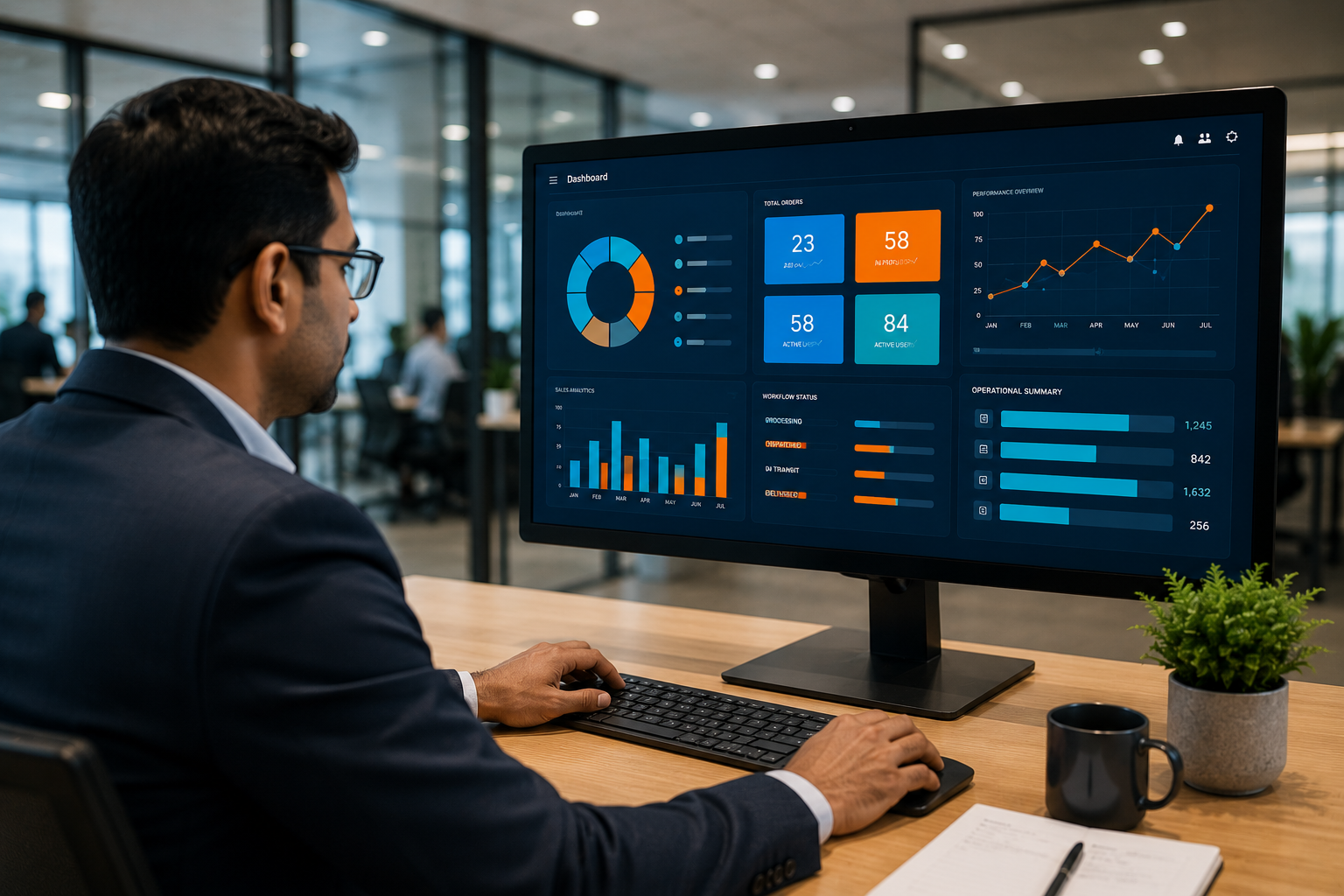
Intelligent lead capture helps B2B websites generate better quality sales enquiries.
5. Prioritise Speed, Mobile, and Core Web Vitals
B2B buyers may be evaluating a large deal, but they still will not wait for a slow website. Slow loading speed reduces trust, hurts SEO, increases bounce rate, and lowers conversions.
Mobile experience also matters. Decision-makers often browse websites on phones while travelling, between meetings, or after receiving a link from someone on their team.
Performance Focus Areas
- Load time under 2.5 seconds
- Compressed images and WebP format
- Clean code and optimized scripts
- Caching and CDN setup
- Mobile-first layouts
- Clear mobile navigation
- Strong Core Web Vitals performance
Official Performance Resource
To understand website performance and Core Web Vitals best practices, refer to Google’s official web performance guidance.
How Logicraftz Solutions LLP helps: We run a full technical audit and implement speed, mobile, and Core Web Vitals improvements as part of every B2B website design project.
6. Design for Scalability
Many B2B websites become difficult to manage within 12 to 18 months. New services get added randomly, location pages become messy, and blogs become disconnected from the sales funnel.
A scalable website structure allows your company to add new services, industries, locations, resources, case studies, and landing pages without breaking the design or confusing users.
Scalable Website Structure Includes
- Modular service page templates
- Industry-specific page templates
- Location landing page templates
- Case study page templates
- A clear information architecture
- Content mapped to awareness, consideration, and decision stages
- An easy-to-use CMS for marketing teams
How Logicraftz Solutions LLP helps: We architect your website for long-term growth with templates, CMS workflows, content structures, and governance systems.

Scalable B2B website design supports new services, industries, locations, and growth campaigns.
Common B2B Website Design Mistakes
Visitors need a clear next step such as demo, quote, or discovery call.
B2B buyers need role-specific answers, not vague promises.
Case studies, results, and metrics are essential for trust-building.
Forms should qualify leads without creating too much friction.
Poor speed reduces trust, SEO visibility, and conversions.
Your website should support future services, regions, and campaigns.
Basic B2B Website vs Revenue-Focused B2B Website
| Area | Basic B2B Website | Revenue-Focused B2B Website |
|---|---|---|
| Purpose | Digital brochure | Lead generation and sales support engine |
| CTA | Generic contact form | Clear demo, quote, audit, or assessment CTA |
| Content | Service list only | Stakeholder-specific content and proof |
| Lead Capture | Basic form submission | Qualified forms, CRM routing, and automation |
| Growth | Difficult to scale | Modular templates and scalable content structure |
Frequently Asked Questions
How much does B2B Website Design cost in India?
A strong B2B website in India can typically cost between ₹2.5 lakhs and ₹7.5 lakhs depending on complexity, integrations, content, pages, and custom requirements.
What is the typical timeline for a B2B website redesign?
Most B2B website redesign projects take around 10 to 16 weeks. Complex integrations, heavy content migration, or custom development can take longer.
What ROI can a good B2B website deliver?
A good B2B website can improve lead quality, reduce cost per lead, support sales conversations, and increase pipeline value. ROI depends on traffic, offer, industry, and sales process.
Which platform is best for B2B websites?
WordPress is often a flexible and cost-effective choice for many Indian B2B companies. Webflow works well for marketing-led websites, while custom platforms suit complex workflows.
Should B2B websites include pricing?
It depends on the sales model. Some B2B companies benefit from starting prices or pricing tiers, while others may prefer quote-based pricing to handle custom requirements.
How does Logicraftz Solutions LLP help?
Logicraftz Solutions LLP combines strategy, design, technical performance, CRM integration, and lead capture to build B2B websites that support pipeline growth.
Continue Reading
Ready to Turn Your B2B Website Into a Pipeline Engine?
A powerful B2B website should communicate value, build trust, qualify leads, support sales, and create a predictable growth channel.
Logicraftz Solutions LLP helps Indian B2B companies build conversion-focused websites with strategy, modern design, proof sections, intelligent lead capture, performance optimization, and scalable structure.
Introduction
A website is often the first impression a customer has of a business. Within a few seconds, visitors decide whether they trust the brand, continue exploring the website, or leave and visit a competitor. This is why investing in Powerful Website Design is no longer optional—it is an essential part of building a successful digital presence. A professionally designed website improves credibility, enhances customer experience, and supports long-term business growth.
Implementing Powerful Website Design Strategies allows businesses to combine visual appeal with functionality, creating websites that are fast, responsive, accessible, and easy to navigate. Modern websites should guide visitors naturally toward meaningful actions such as submitting enquiries, requesting quotations, scheduling consultations, or completing purchases. Businesses that prioritize user experience, technical performance, and quality content are more likely to achieve sustainable online success.
Whether serving local customers or operating globally, a well-designed website becomes one of the most valuable business assets for attracting new customers and strengthening brand reputation.
Why Website Design Matters
Customers expect websites to provide accurate information quickly while delivering a smooth browsing experience across every device. A well-designed website creates confidence and encourages visitors to explore additional pages before making contact.
Professional website design helps businesses:
- Build customer trust
- Improve online credibility
- Increase customer engagement
- Support digital marketing
- Generate business enquiries
- Strengthen brand identity
- Improve navigation
- Increase accessibility
- Enhance customer satisfaction
- Support long-term business growth
A positive first impression often determines whether a visitor becomes a future customer.
Powerful Website Design Strategies for Modern Businesses
Successful websites combine creativity with usability. Effective Powerful Website Design Strategies focus on helping visitors achieve their goals while supporting business objectives.
Important design principles include:
- Clean page layouts
- Responsive design
- Fast loading performance
- Clear navigation
- Readable typography
- Professional colour schemes
- High-quality images
- Consistent branding
- Accessible interfaces
- Strong call-to-action buttons
When these elements work together, businesses create memorable digital experiences that encourage customer interaction.
User Experience Is the Foundation of Success
Excellent user experience ensures visitors can easily find information without unnecessary confusion or delays. Every page should be designed with customer convenience in mind.
Businesses should focus on:
- Simple navigation
- Logical content organization
- Fast page loading
- Mobile responsiveness
- Accessible design
- Helpful content
- Easy enquiry forms
- Secure browsing
- Internal linking
- Clear visual hierarchy
Improving usability increases customer satisfaction while encouraging visitors to remain on the website longer.
Build Websites That Search Engines Understand
A visually attractive website should also perform well technically. Search engines evaluate website quality using multiple factors, including structure, performance, accessibility, and content quality.
Businesses should implement:
- Secure HTTPS
- Structured headings
- Image optimization
- Internal links
- Mobile-friendly layouts
- Fast-loading pages
- XML sitemaps
- Schema markup
- Technical optimization
- Regular content updates
Google's Search Central documentation provides official recommendations for creating high-quality websites and improving visibility:
https://developers.google.com/search/docs
Following trusted best practices helps businesses build websites that perform well for both users and search engines.
Learn from Trusted Design Resources
Businesses looking to improve website usability and accessibility should also review the design guidance published by the Nielsen Norman Group:
https://www.nngroup.com/
Additionally, the Web Content Accessibility Guidelines (WCAG) provide internationally recognized recommendations for creating websites that are accessible to all users:
https://www.w3.org/WAI/standards-guidelines/wcag/
Learning from authoritative resources enables organizations to create websites that deliver better user experiences while meeting modern web standards.
Continuous Website Improvement Creates Long-Term Success
Launching a professional website is only the beginning of a successful digital journey. Customer expectations, technology, and search engine algorithms continue to evolve, making regular improvements essential for maintaining strong online performance. Businesses should consistently review website analytics, update content, improve page speed, strengthen security, optimize navigation, and enhance accessibility to ensure visitors always receive the best possible experience. Regular testing and performance monitoring also help identify opportunities to improve engagement and increase conversions. By implementing Powerful Website Design Strategies and continuously refining every aspect of Powerful Website Design, organizations can build a future-ready digital platform that attracts more visitors, strengthens customer trust, supports business growth, and delivers measurable results for years to come.
Website Design Strategies That Build High-Performing Digital Experiences
Implementing effective Website Design Strategies is one of the most important investments a business can make in today's digital environment. A website should not only look visually appealing but also deliver an exceptional experience that encourages visitors to explore services, engage with content, and take meaningful actions. Businesses that focus on usability, accessibility, performance, and customer satisfaction are more likely to build trust and convert visitors into loyal customers. Every design decision—from page layout and navigation to typography and imagery—should support both user expectations and business objectives.
Successful Powerful Website Design Strategies combine creativity with functionality to create websites that perform consistently across all devices. Modern users expect fast-loading pages, intuitive navigation, responsive layouts, and content that is easy to understand. A well-planned design guides visitors naturally through the customer journey, helping them find information quickly without unnecessary distractions. Clear call-to-action buttons, logical page structures, professional branding, and optimized visual elements all contribute to a positive browsing experience that encourages higher engagement and better conversion opportunities.
A truly Powerful Website Design also focuses on technical quality alongside visual appeal. Businesses should ensure that every website is mobile-friendly, secure, accessible, and optimized for search engines. High-quality images, readable typography, proper spacing, consistent colour schemes, and responsive interfaces create a professional appearance while improving usability. Regular testing across different browsers and devices helps ensure visitors receive the same high-quality experience regardless of how they access the website.
Website performance should also be reviewed continuously. Monitoring visitor behaviour, page loading speed, user engagement, and navigation patterns helps businesses identify opportunities for improvement. Updating content regularly, improving internal linking, strengthening website security, and optimizing page structure ensure the website remains relevant and competitive. As customer expectations and technology continue to evolve, organizations that invest in ongoing improvements are better positioned to strengthen their digital presence and achieve long-term success.
Businesses that implement modern design principles while prioritizing customer experience create websites that become valuable business assets rather than simple online brochures. By following proven Website Design Strategies, adopting Powerful Website Design Strategies, and continuously refining every aspect of Powerful Website Design, organizations can increase customer confidence, improve online visibility, generate more qualified enquiries, and build a scalable digital platform that supports sustainable business growth in an increasingly competitive online marketplace.