
Call Logicraftz Professionals +91 2231982472 for Custom Website Development, UX optimization, scalable web solutions, website design, and custom web development support.
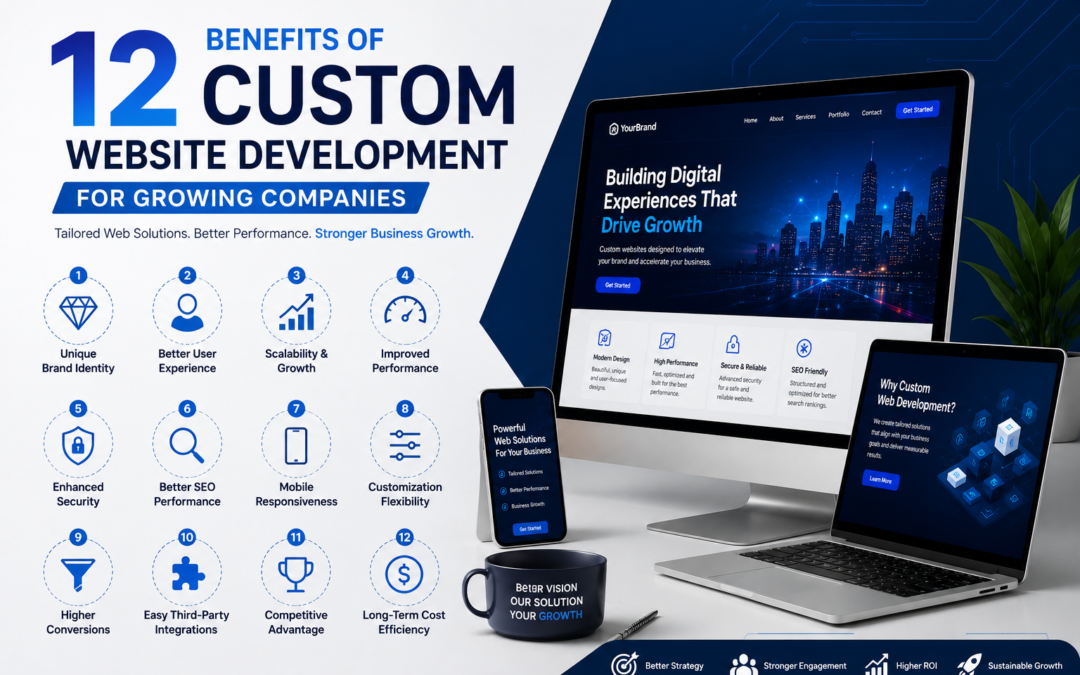
Custom Website Development: 12 Benefits for Growing Companies
A practical guide to tailored web solutions, better website design, UX optimization, scalability, performance, and long-term business growth.
Introduction
Custom Website Development has become one of the most valuable investments for growing companies that want better performance, stronger branding, improved user experience, and scalable digital growth.
Template-based websites may look affordable at first, but they often limit flexibility, speed, security, and future expansion. A tailored business website gives your company more control over design, features, integrations, and customer journeys.
With professional website design, smart UX optimization, and scalable web solutions, businesses can create digital platforms that support lead generation, customer engagement, and long-term growth.

Tailored websites help growing companies improve performance, branding, and customer experience.
Table of Contents
- Why Custom Websites Matter
- 1. Unique Brand Identity
- 2. Better User Experience
- 3. Stronger UX Optimization
- 4. Better Website Performance
- 5. Scalability for Growth
- 6. Improved SEO Foundation
- 7. Higher Conversion Rates
- 8. Stronger Security
- 9. Easy Third-Party Integrations
- 10. Flexible Web Solutions
- 11. Competitive Advantage
- 12. Long-Term Cost Efficiency
- Common Website Mistakes
- Frequently Asked Questions
Why Custom Websites Matter for Growing Companies
As businesses grow, their website requirements become more complex. They need more service pages, better lead capture, CRM integrations, landing pages, blog systems, speed optimization, security, and flexible content management.
A custom-built website allows your digital platform to match your business goals instead of forcing your business to fit inside a fixed template. This approach gives more freedom in design, content structure, functionality, and future expansion.
Create a website that reflects your company identity clearly.
Guide users smoothly from awareness to enquiry.
Add services, features, and integrations as your business grows.
Support SEO, conversions, and long-term digital growth.
1. Unique Brand Identity
A custom website helps your business stand out with a unique visual identity. Instead of using a common template that many other businesses may also use, your website can be designed around your brand colors, message, services, and customer expectations.
- Custom layouts
- Brand-focused visuals
- Unique page sections
- Professional messaging
- Consistent design language
This improves trust and makes your business look more professional in front of potential customers.
2. Better User Experience
User experience plays a major role in website success. Visitors should be able to understand your services, navigate pages, read content, and contact your team without confusion.
Professional website design helps create a clear user journey. The layout, content flow, buttons, images, forms, and navigation all work together to improve engagement.
- Simple navigation
- Clear service sections
- Easy enquiry forms
- Readable content
- Mobile-friendly layouts
3. Stronger UX Optimization
UX optimization focuses on improving how users interact with your website. It helps reduce friction, improve clarity, and guide visitors toward important actions such as calling, filling forms, or booking a consultation.
- Better CTA placement
- Shorter enquiry forms
- Clear information hierarchy
- Improved mobile usability
- Reduced bounce rate
- Stronger conversion paths
A website built around user behavior can generate better results from the same traffic.

UX optimization helps users navigate easily and take action faster.
4. Better Website Performance
Performance affects user experience, SEO, conversions, and brand trust. A slow website can push visitors away before they even understand your offer.
Custom-built websites can be optimized with clean code, compressed images, proper caching, lightweight components, and strong hosting configuration.
- Fast page loading
- Optimized images
- Clean code structure
- Reduced unnecessary scripts
- Better Core Web Vitals
5. Scalability for Future Growth
Growing companies need websites that can expand with their business. A template may work in the beginning, but it can become restrictive when you need new features, service pages, landing pages, or integrations.
Custom web development allows businesses to plan scalable website architecture from the start.
- Add new services easily
- Create location pages
- Build landing pages
- Add custom features
- Connect CRM or ERP systems
- Scale content and blog sections
6. Improved SEO Foundation
A strong website should be built with SEO in mind from the beginning. Clean URLs, optimized headings, structured content, schema markup, internal links, and fast loading speed help search engines understand your website better.
- SEO-friendly URLs
- Proper heading structure
- Optimized metadata
- Internal linking
- Schema markup
- Image alt text
- Mobile responsiveness
Official Website Performance Resource
To understand website performance and Core Web Vitals best practices, you can refer to Google’s official Web Vitals guide.

Custom web development supports performance, SEO, and future website scalability.
7. Higher Conversion Rates
A custom website can be planned around business goals such as lead generation, product sales, demo bookings, quote requests, or consultation calls.
Conversion-focused design improves how users move from interest to action. With the right structure, visitors can quickly understand your value and contact your team.
- Strong CTAs
- Trust-building sections
- Simple forms
- Clear service benefits
- Landing page strategy
- Better content flow
8. Stronger Security
Security is important for every business website, especially when collecting customer data, enquiry forms, payments, login details, or business information.
A custom-built solution allows better control over security standards and access management.
- SSL setup
- Secure hosting
- Regular backups
- Role-based access
- Malware protection
- Strong login controls
- Secure form handling
9. Easy Third-Party Integrations
Modern businesses use multiple tools for sales, marketing, payments, customer support, analytics, and operations. Your website should connect with these tools smoothly.
- CRM integration
- ERP integration
- Payment gateway integration
- WhatsApp integration
- Email marketing tools
- Analytics dashboards
- Lead automation systems
Connected web solutions help teams work faster and manage data more efficiently.

Integrated web solutions help growing companies connect websites with business tools.
10. Flexible Web Solutions for Business Needs
Every business has different goals, workflows, and customer journeys. Custom websites allow you to create features that match your exact business requirements.
- Custom enquiry forms
- Booking systems
- Customer portals
- Product catalogs
- Service calculators
- Dashboards
- Custom landing pages
This flexibility helps businesses create a digital experience that supports both customers and internal teams.
11. Competitive Advantage
A custom website gives your business an edge over competitors using outdated templates or poorly optimized websites. Better design, speed, content structure, and user experience can directly influence customer decisions.
- More professional appearance
- Clearer service communication
- Better trust signals
- Stronger user experience
- Improved lead generation
12. Long-Term Cost Efficiency
Although a custom website may require a higher initial investment, it can deliver better value over time. A properly planned website reduces the need for frequent redesigns, patchwork fixes, and limited template-based workarounds.
- Lower redesign dependency
- Better scalability
- Improved performance
- Fewer technical limitations
- Higher long-term ROI
For growing companies, a tailored website is not only a design project. It is a long-term digital asset.
Common Website Development Mistakes to Avoid
Cheap websites may limit performance, scalability, and future growth.
Without UX optimization, visitors may struggle to take action.
Weak design reduces credibility and engagement.
SEO should be included from the beginning of development.
Your website should connect with important business tools.
A website should support future services, content, and features.
Frequently Asked Questions
What is Custom Website Development?
Custom Website Development means creating a website based on a company’s unique business goals, design needs, features, integrations, and customer journey instead of using a fixed template.
Why is a custom website better than a template?
A custom website offers more flexibility, better branding, stronger performance, improved UX, easier integrations, and better scalability compared to many template-based websites.
How does UX optimization improve website results?
UX optimization improves navigation, readability, CTA placement, forms, and user journeys so visitors can find information faster and take action more easily.
Can custom web development improve SEO?
Yes. Custom web development can improve SEO by creating clean code, faster pages, better structure, optimized content areas, mobile responsiveness, and schema-ready layouts.
Is custom development suitable for growing companies?
Yes. Growing companies benefit from tailored websites because they need scalable web solutions, integrations, lead generation systems, and flexible content management.
Continue Reading
Ready to Build a Custom Business Website?
A tailored website helps your business improve design, user experience, performance, integrations, SEO, and long-term growth.
Logicraftz Solutions LLP builds scalable web solutions with strategic website design, UX optimization, custom web development, and conversion-focused planning.
Introduction
A professional online presence has become one of the most valuable assets for organizations operating in today's competitive marketplace. Customers frequently search online before making purchasing decisions, comparing products, or contacting service providers. The quality of a company's digital platform often influences whether visitors choose to engage further or move to a competitor. Creating an informative, visually appealing, and easy-to-use online experience helps organizations establish credibility while improving customer engagement.
An effective online platform should combine attractive visuals, clear communication, reliable performance, and intuitive navigation. Every page should guide visitors naturally toward the information they need while reducing confusion and unnecessary complexity. Businesses that invest in high-quality digital experiences are better positioned to attract new customers, strengthen their reputation, and support long-term growth.
As technology continues to evolve, organizations should regularly improve their digital platforms to meet changing customer expectations and remain competitive within their industries.
The Importance of a Professional Online Presence
Customers often form opinions about a company within just a few seconds of visiting its online platform. Clear navigation, organized content, and professional branding immediately communicate reliability and professionalism.
A successful digital platform should provide:
- Simple navigation
- Professional visual presentation
- Clear company information
- Fast loading pages
- Secure browsing
- Accessible content
- Easy communication options
- Helpful resources
- Consistent branding
- Reliable functionality
Delivering a positive first impression encourages visitors to continue exploring while increasing confidence in the organization.
Create an Excellent User Experience
Visitors expect information to be easy to find and simple to understand. Complicated navigation or poorly organized pages often discourage users from continuing their journey.
Organizations should focus on:
- Logical menu structures
- Clear page hierarchy
- Readable typography
- Consistent spacing
- High-quality visuals
- Well-structured content
- Accessible navigation
- Effective call-to-action buttons
- Responsive functionality
- User-friendly forms
Providing a smooth browsing experience increases customer satisfaction while encouraging visitors to spend more time exploring available products and services.
Publish Helpful and Educational Content
High-quality content demonstrates expertise while helping customers solve problems and make informed decisions. Informative resources improve engagement and encourage visitors to return for additional information.
Useful content may include:
- Industry insights
- Educational articles
- Product information
- Service explanations
- Customer success stories
- Frequently asked questions
- Company updates
- Buying guides
- Expert recommendations
- Resource libraries
Publishing valuable content consistently helps establish authority while improving customer confidence.
Performance Influences Customer Satisfaction
People expect digital platforms to load quickly and function smoothly. Slow performance or technical issues often create frustration, leading visitors to leave before interacting with the company.
Performance improvements should include:
- Optimized images
- Efficient coding
- Reliable hosting
- Browser caching
- Content delivery networks
- Database optimization
- Regular maintenance
- Security updates
- Performance testing
- Error monitoring
Maintaining excellent performance creates a more enjoyable browsing experience while supporting long-term customer satisfaction.
Building Long-Term Customer Relationships
A successful online platform should do more than present information. It should help organizations communicate effectively, provide value, answer questions, and build lasting customer relationships. Consistent improvements, reliable functionality, valuable educational resources, and professional presentation all contribute to stronger customer engagement. Businesses that prioritize quality and continuous improvement establish a stronger digital presence, attract more qualified enquiries, and create a reliable foundation for sustainable growth in an increasingly competitive online marketplace.
Strengthen Security and Customer Confidence
Security is one of the most important aspects of any online platform. Customers expect their personal information, enquiries, and transactions to remain protected whenever they interact with a company. Strong security practices help prevent unauthorized access while improving confidence in the organization's digital presence.
Essential security measures include:
- SSL encryption
- Secure hosting environments
- Firewall protection
- Malware detection
- Automatic backups
- Multi-factor authentication
- User access controls
- Regular software updates
- Security monitoring
- Data protection policies
Maintaining a secure environment reduces operational risks while demonstrating a commitment to protecting customer information.
Connect Digital Platforms with Business Applications
Modern organizations often rely on multiple software systems to manage finance, customer relationships, inventory, communication, and reporting. Connecting these platforms allows information to move efficiently between departments, reducing duplicate work and improving overall productivity.
Common integrations include:
- Enterprise resource planning platforms
- Customer relationship management systems
- Accounting software
- Online payment gateways
- Inventory management platforms
- Appointment scheduling systems
- Customer support applications
- Email communication services
- Document management software
- Reporting dashboards
Well-connected systems help employees work more efficiently while providing customers with faster and more consistent service experiences.
Accessibility Improves User Satisfaction
Every visitor should be able to access information easily, regardless of their abilities or the device they use. Creating inclusive digital experiences expands the potential audience while improving overall usability for everyone.
Accessibility improvements include:
- High colour contrast
- Readable font sizes
- Keyboard-friendly navigation
- Alternative text for informative images
- Proper heading structure
- Descriptive link text
- Clearly labelled forms
- Consistent page layouts
- Accessible multimedia
- Simple navigation patterns
Organizations that prioritize accessibility demonstrate professionalism while ensuring their digital platforms serve a wider audience.
Regular Maintenance Supports Long-Term Performance
Launching an online platform is only the beginning. Continuous maintenance helps ensure that content remains accurate, software stays secure, and performance remains consistent as technology evolves.
A regular maintenance plan should include:
- Updating software components
- Reviewing page performance
- Checking for broken links
- Refreshing outdated information
- Testing contact forms
- Monitoring security
- Optimizing images
- Reviewing search visibility
- Verifying backups
- Improving technical performance
Routine maintenance reduces unexpected issues and keeps the platform operating efficiently throughout its lifecycle.
Invest in Continuous Digital Improvement
Technology, customer expectations, and search engine algorithms continue to evolve. Organizations that regularly review their digital presence and implement improvements remain more competitive than those that allow their platforms to become outdated.
Future enhancements may include introducing interactive features, improving navigation, expanding educational resources, strengthening security, integrating emerging technologies, and refining the overall user experience. Small, consistent improvements made over time often deliver significant long-term benefits by increasing customer engagement, improving operational efficiency, and strengthening brand reputation.
By focusing on quality, reliability, accessibility, and innovation, businesses create a strong digital foundation that supports sustainable growth, adapts to changing market conditions, and delivers exceptional value to customers for years to come.
Future-Ready Digital Platforms Drive Sustainable Growth
Organizations that embrace continuous innovation are better prepared to meet changing customer expectations and emerging market opportunities. A successful online presence should evolve alongside new technologies, customer behaviour, and industry standards rather than remaining unchanged after launch. Regular performance reviews, content improvements, enhanced security, and the adoption of modern digital capabilities help maintain a competitive advantage while improving the overall customer experience. Businesses that invest in scalability, operational efficiency, and long-term digital planning create platforms that continue to deliver measurable value year after year. By focusing on quality, reliability, accessibility, and ongoing improvement, organizations strengthen their brand reputation, build lasting customer relationships, and establish a solid digital foundation that supports sustainable business growth in an increasingly competitive online environment.